Can I enter Australia on a tourist visa then switch to WHV?

You can holiday in Oz on a tourist visa first, but you generally can’t “switch” to a first Working Holiday Visa (WHV) while you’re still in Australia.

Here’s how it works in real life:

  • First WHV (subclass 417 or 462): you need to be outside Australia to apply and outside Australia when it’s granted, so you’ll usually have to leave Australia, lodge it offshore and wait offshore (people often pop to NZ, Bali, etc.).
  • If you’re already in Australia on a visitor visa/ETA: don’t bank on getting work rights while you wait. Visitor visas are no-work visas.
  • Watch your visitor visa conditions: some tourist visas come with a “No Further Stay” condition, and you’d need a waiver request if you ever want to lodge certain other visas onshore.

Big practical tip: if your end goal is a WHV, it’s usually cleaner (and less stress at the airport) to apply for the WHV first, get it granted, then fly in on that visa – saves the whole “visa hop” admin and keeps the roadie vibes nice and simple. 🙂

2026-03-09T22:43:12+11:00|

Do I need to book a powered campground?

You don’t need to book a powered campground for every night – only if your camper (or your travel style) actually needs mains electricity.

Most campers in Oz and NZ are built to run “off-grid” for a bit using a house battery (often backed up by solar) and/or gas, so you can happily mix it up between powered sites, unpowered sites and the occasional free camp.

A powered site is worth booking if you:

  • Want to charge up properly (house battery, phones, laptops, camera gear) after a few nights off-grid.
  • Need 240V plugs for things like a hair dryer, straighteners, a microwave (if your van has one) or a medical device.
  • Are relying on air con or electric heating (mostly a thing in bigger motorhomes, or if you’re chasing comfort in the tropics).
  • Want an easier night with proper facilities – hot showers, laundry, camp kitchen, sometimes a pool and a bit of holiday-park vibe 😄.

You can skip powered and go unpowered/free camping if you:

  • Have a decent battery/solar setup and you’re happy living on 12V (lights, water pump, USB charging).
  • Don’t mind being a little more “camp-mode” with power use (think: charge while you drive, keep lights minimal at night).
  • Are travelling in shoulder season and can snag unpowered spots easily.

A proper backpacker trick is to do 2-4 nights unpowered, then one powered night to reset everything and treat yourself to laundry and a long shower. Beaut balance.

If you’re keen to do it on the cheap (without getting moved on at 2am), see our full guide to free camping in Australia here.

2026-03-09T22:43:12+11:00|

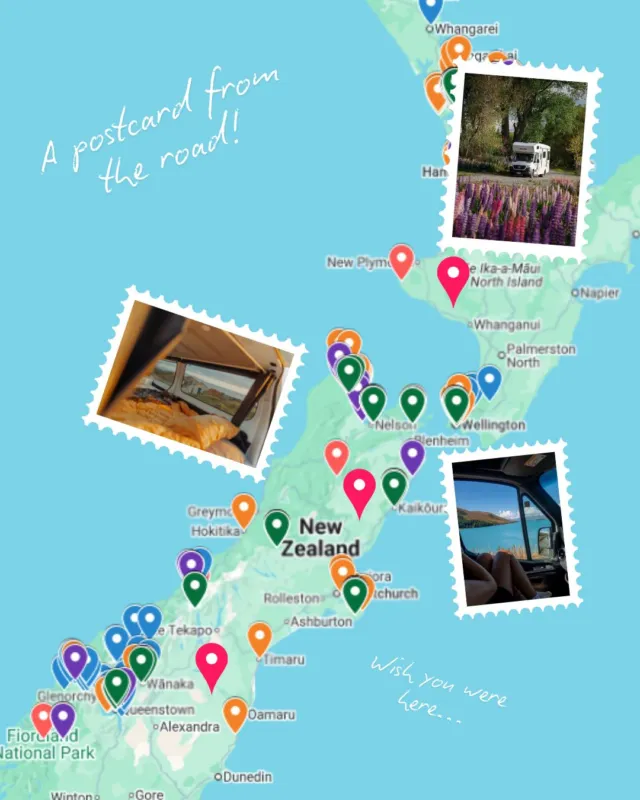
Can I travel between the North and South islands in New Zealand?

Yep – travelling between the North and South Islands is super doable in NZ, and it’s a proper rite of passage for an epic roadie.

Most people do it by ferry between Wellington (North) and Picton (South), and you can usually take your campervan, motorhome or car straight on board. The crossing is roughly 3-3.5 hours, and on a clear day rolling into the Marlborough Sounds is an absolute beaut.

A few real-world tips so it’s smooth as:

  • Book the ferry early in peak season (especially Dec-Feb and school hols) because vehicle spots go fast.
  • Allow a buffer day either side if your schedule’s tight – sailings can get moved around when the weather’s being a menace.
  • Get to check-in early (think 60-90 mins before) or you’ll be doing the stressed-out sprint at the terminal.
  • Check your rental terms – most camper hire companies allow inter-island travel, but some need you to let them know or have conditions (and a few won’t allow it at all).

If ferries aren’t your vibe, you can fly between islands, but you can’t exactly chuck a camper in the overhead locker – you’d normally be looking at ending one hire and starting another (or doing a one-way rental) rather than taking the same van across.

2026-03-09T22:43:12+11:00|

What time do campgrounds usually fill up?

Most campgrounds start getting packed from late morning and can be full by mid-late afternoon – especially anywhere coastal, near a big town or on a popular roadie route.

In real-world terms, here’s the usual vibe in Oz and NZ:

  • Peak season (Dec-Feb), weekends and school hols: the best spots can be gone by 12pm-3pm, and free/cheap first-come sites often fill even earlier.
  • National parks + “iconic” stops: they’re more likely to be booked out days-weeks ahead, so it’s not just a “what time” thing.
  • Shoulder season + midweek: you can often roll in 3pm-5pm and still be sweet, but the small/popular places can still fill early.
  • Events (surf comps, festivals, long weekends): all bets are off – people camp like it’s a sport.

If you want the least stress (and the best pick of sites), aim to arrive:

  • 12pm-2pm if you’re winging it.
  • Before 3pm if it’s a weekend or a hotspot.
  • With 2-3 backup options pinned (because the “one last spot” dream dies quickly at 5:30pm 😅).

One extra pro tip: heaps of caravan parks will hold bookings until a certain time (often late arvo) then release no-shows, so if you’re running late, give them a quick call and they’ll usually keep you in the loop.

2026-03-09T22:43:12+11:00|

Can I leave and re-enter Australia on a WHV?

Yep – a Working Holiday Visa (WHV) lets you leave Australia and come back in as many times as you like while the visa is still valid.

A few things to keep in mind so you don’t accidentally stitch yourself up:

  • The clock doesn’t stop when you fly out. If your WHV ends on a certain date, it still ends on that date even if you’re sipping cocktails in Bali.
  • Re-entry is always subject to border checks (health, character, etc.), so make sure you’re not in breach of any conditions.
  • If you’re waiting on another visa and you’re on a bridging visa, you’ll usually need a Bridging Visa B (BVB) to leave and re-enter – otherwise your bridging visa can cease when you depart.

Pro tip: before you book flights, check your visa details in VEVO or your grant letter so you know your exact expiry and travel rights.

2026-03-09T22:43:11+11:00|

Can you sleep in supermarket car parks?

Most of the time: nah, you can’t (and shouldn’t) sleep in supermarket car parks.

Supermarket car parks are private property, and nearly always have time limits, security patrols, gates/boom arms, cleaners and delivery trucks rolling in at stupid o’clock. Even if you’re parked “legally” for the hours, sleeping in the vehicle can still be treated as camping in some areas, and some councils even have agreements to enforce car park time limits and issue fines if you overstay.

If you’re absolutely cooked and need a safe stop, the only “safe-ish” way a supermarket car park works is:

  • You get explicit permission from the store manager or centre security (not just “I reckon it’ll be fine”)
  • You stay low-key (no chairs, awning, cooking setup, music, rubbish, toilet business)
  • You arrive late, leave early, and don’t take the mick

Honestly though, for an easy, drama-free night, you’re way better off aiming for signed rest areas, proper free/low-cost camps, showgrounds or a caravan park when you’re near a town.

For the full lowdown on what’s actually allowed (and what gets you moved on), see our full guide to campervan parking here.

2026-03-09T22:43:11+11:00|

Can I live in a campervan while on a Working Holiday Visa?

Yep – you can absolutely live in a campervan on a Working Holiday Visa in Australia or NZ, and loads of backpackers do it to keep costs down and stay flexible.

The only catch is: the visa rules don’t change just because you’re sleeping in a camper. You still need to stick to your visa conditions (work limits, employer rules, regional work stuff if you’re chasing extensions, etc), and you’ll need to be a bit sharper on the boring life-admin bits:

  • You’ll still need an “address” for paperwork. Most people use a hostel for the first week or two, a mate’s place, a work address (with permission) or a PO Box/parcel locker for mail.
  • Parking isn’t “anywhere you fit”. Councils fine hard in a lot of beach towns and cities, and rangers love an easy target at 2am. Use proper spots like holiday parks, campsites and legit free/low-cost areas, and check signage every single time.
  • Be realistic about facilities. If your van doesn’t have a toilet/shower, you’ll be leaning on campsites, gym/pool passes, truck stops, public facilities and the occasional paid park-up to reset yourself (and your laundry pile).
  • Work and routine take a tiny bit more planning. Early starts, decent sleep and keeping clothes/food sorted matters more when your “house” is on wheels.
  • Insurance + security are non-negotiable. Get cover that matches what you’re actually doing (driving, personal stuff, excess/bond rules) and don’t leave valuables lying around – camper break-ins do happen.

A bit of real talk from the road: vanlife is an epic vibe when you treat it like a travel hack, not a loophole. Do it right, be respectful, don’t push your luck with dodgy overnight spots and you’ll have a wicked time. Yeeeeew!

2026-03-09T22:43:11+11:00|

What apps do you need for campervan travel?

You can do a full Oz or NZ roadie with a small handful of apps – anything more is just phone clutter.

  • WikiCamps (Australia) for finding camps, dump points, showers, water taps and the usual roadie essentials, even when you’re off-grid.
  • CamperMate (Australia + NZ) as a solid all-rounder for camps, facilities and planning (also handy offline).
  • Rankers Camping NZ for NZ-specific camping spots and info.
  • Google Maps for navigation – download your offline map areas before you head into no-reception land. 🗺️
  • BOM Weather (Australia) + MetService (New Zealand) for proper forecasts, radar and warnings (way more useful than guessing by vibes). 🌦️
  • FuelRadar (Australia) + Gaspy (New Zealand) to dodge getting absolutely stitched up at the bowser. ⛽️
  • Emergency+ (Australia) for emergencies – it helps you give responders your exact location (including what3words). 🆘
  • NZTA Traffic & Travel / Journey Planner (New Zealand) for live state highway closures, incidents and My Journeys alerts.

Quick pro tip: set these up before pickup day on decent Wi-Fi (download offline maps/content, save your must-haves, turn on warning/road alert notifications) and you’ll be cruising when everyone else is panic-refreshing with 1 bar of signal.

2026-03-09T22:43:11+11:00|

Q: What should I do in case of an emergency or breakdown?

In case of an emergency or breakdown while traveling in a campervan in Australia or New Zealand, follow these steps:

  1. Stay safe: Pull over to a safe location off the road if possible, turn on your hazard lights and set up reflective triangles if you have them.
  2. Contact roadside assistance: Your rental agreement will usually include 24/7 roadside assistance. Call the provided number for help with breakdowns, flat tires or other issues.
  3. Emergency services: For serious emergencies, call the local emergency number (000 in Australia and 111 in New Zealand).
  4. Inform the rental company: Let your rental company know about the situation as soon as possible. They can guide you through the next steps and arrange for any necessary repairs or vehicle replacements.
  5. Follow instructions: Adhere to the advice given by roadside assistance or the rental company, and wait for help in a safe location.

Remember, your safety is the top priority. If you’re unclear on anything, get in touch and we’ll provide detailed information and our top tips for staying safe.

2024-12-18T08:25:07+11:00|
Go to Top