
Choose your weapon


Your Dates & Locations:
-- > -- -- > -- ---- -- Days
Thanks!
We’re comparing ALL online rates to find you the best campervan deals.
Send us your full name on WhatsApp or Messenger & we’ll do the rest!
.png)

Sit tight
We're finding the best deals for you.
5.0 
3,000+ Google & Facebook reviews

10s
A Melbourne to Adelaide road trip can be done in a single long day if you stick to the inland highway. We wouldn’t recommend it. The version worth taking, the one that runs along the Great Ocean Road and down through the Limestone Coast, turns two capital cities into a proper week away, and it’s the route our team keeps coming back to when people ask us how to do this trip properly.
What makes it worth the extra days is the sheer variety packed into one drive. You’ve got the Twelve Apostles and the rest of the Great Ocean Road’s greatest hits, volcanic craters and sinkholes around Mount Gambier, a genuinely underrated stretch of coast through Robe and the Limestone Coast, and a final run into the Adelaide Hills wine country before you roll into the city. Few road trips in the country change character this much from one day to the next.
This is the seven-day version we’d plan for ourselves: a pace with room to actually get out of the car at each stop, rather than a checklist you’re racing through. Below, we’ve laid out the route day by day, what we’d recommend prioritising when a day gets busy, and where we’d stay and eat along the way.
How far is it from Melbourne to Adelaide, and why do we recommend a week?
If you’re purely after the numbers, the direct route between the two cities runs along the Western Highway through Ballarat, Stawell and Bordertown. It’s around 730 km and takes about 8 hours of non-stop driving, which is entirely doable as a single day if getting from A to B is genuinely all you’re after.
This itinerary isn’t that drive. The scenic route we’re recommending, out along the Great Ocean Road and down through the Limestone Coast, comes in at around 1,040 km in total, closer to 14 hours behind the wheel once you add it all up. That’s a real difference, and it’s the reason we don’t recommend trying to squeeze this route into a long weekend. Spread across seven days, though, no single day asks for more than about four hours of driving, and most days are a lot less than that. You get the Great Ocean Road properly, rather than glancing at the Twelve Apostles from a car park before getting back on the road.
If your schedule is tighter, five days is the minimum we’d suggest for this coastal route, combining a couple of the shorter legs. But seven is the pace we’d plan for ourselves, and it’s the one this guide is built around.
Melbourne to Adelaide: 7-day route at a glance
Here’s the whole trip in one place before we get into the detail of each day. A simple route map plotting these overnight stops, Melbourne, Apollo Bay, Port Campbell, Port Fairy, Mount Gambier, Robe, Victor Harbor and Adelaide, is genuinely worth having open alongside this guide so you can see how the whole week fits together geographically.
- Day 1: Melbourne to Apollo Bay – 187 km, about 3 hours of driving
- Day 2: Apollo Bay to Port Campbell – 96 km, about 1 hour 45 minutes
- Day 3: Port Campbell to Port Fairy – 80 km, about 1 hour
- Day 4: Port Fairy to Mount Gambier – 130 km, about 1 hour 30 minutes
- Day 5: Mount Gambier to Robe – 133 km, about 1 hour 45 minutes
- Day 6: Robe to Victor Harbor – 330 km, about 4 hours (the longest driving day)
- Day 7: Victor Harbor to Adelaide – 85 km, about 1 hour, plus a McLaren Vale detour if you’ve got the time

Day 1: Melbourne to Apollo Bay
Distance: 187 km (about 3 hours)
If you can, spend the night before this trip starts in Melbourne rather than trying to fit a full day of sightseeing in before you hit the road. St Kilda’s a good base for it, close to the beach, an easy tram ride from the city, and if you’re around at dusk, worth a stroll along the pier for the little penguin colony that calls it home. A coffee and a wander through Queen Victoria Market the next morning is plenty before you set off, there’s a genuinely big day of Great Ocean Road stops ahead, and you don’t want to be racing the light to fit them all in.
Once you’re on the road, the drive itself doesn’t take long, but you’ll want the whole day for it. This is the most iconic stretch of coast in the country, and every stop earns its place on the itinerary.
What to do
Torquay and Bells Beach
Torquay is the unofficial capital of Australian surfing, and the Australian National Surfing Museum is worth half an hour if you want the history rather than just the merch at the surf shops. Bells Beach, a short drive on, is one of the most famous breaks in the world, and even if nobody in the car surfs, the cliff-top views are worth the stop.
Great Ocean Road Memorial Arch
A quick photo stop with genuine substance behind it. The road was built by returned WWI soldiers, and the plaque here tells that story properly. Five minutes, tops, but worth knowing before you drive the rest of the road.
Lorne
The natural halfway point for a proper break. Walk the pier, grab an ice cream, or if you’ve got the legs for it, Teddy’s Lookout gives you one of the better panoramic views of the coast from above town.
Erskine Falls
Ten minutes inland from Lorne and a genuinely worthwhile detour. A short walk drops you into rainforest and down to the base of the falls, mist and all.
Where to spend the extra time: if the day’s running long, Erskine Falls is the one we’d keep over Beauchamp Falls further along. Beauchamp is lovely after rain but underwhelming in a dry spell, so it’s worth skipping unless there’s been solid rainfall in the past few days.
Where to eat
Swing Bridge Cafe (Lorne)
Riverside, relaxed, and a good coffee and toastie stop with a view of Lorne’s historic swing bridge.
Where to stay
Marengo Holiday Park
Right on the beach just outside town, and a solid pick if you’re travelling by campervan. Spacious sites, clean facilities, and koalas in the gum trees overhead.
Aire Crossing (Great Otway National Park)
A no-frills free camp for anyone wanting to get properly off-grid for a night, no power, no facilities beyond the basics, just trees and quiet.
Day 2: Apollo Bay to Port Campbell
Distance: 96 km (about 1 hour 45 minutes)
This is the shortest drive of the whole trip by distance, and also the one with the most reason to take your time. The stretch between Apollo Bay and Port Campbell is where the Great Ocean Road earns its reputation, so we’d plan the whole day around it rather than treating the driving time as any kind of guide to how long you’ll actually be out here.
Here’s the order we’d recommend running it in, starting from Apollo Bay:
- Maits Rest first, a short, easy rainforest walk that’s a nice way to ease into the day, then the detour to Cape Otway Lightstation if you’ve got an hour and a half to spare, keep an eye up in the gum trees along the drive in, this stretch is genuinely reliable for wild koala sightings.
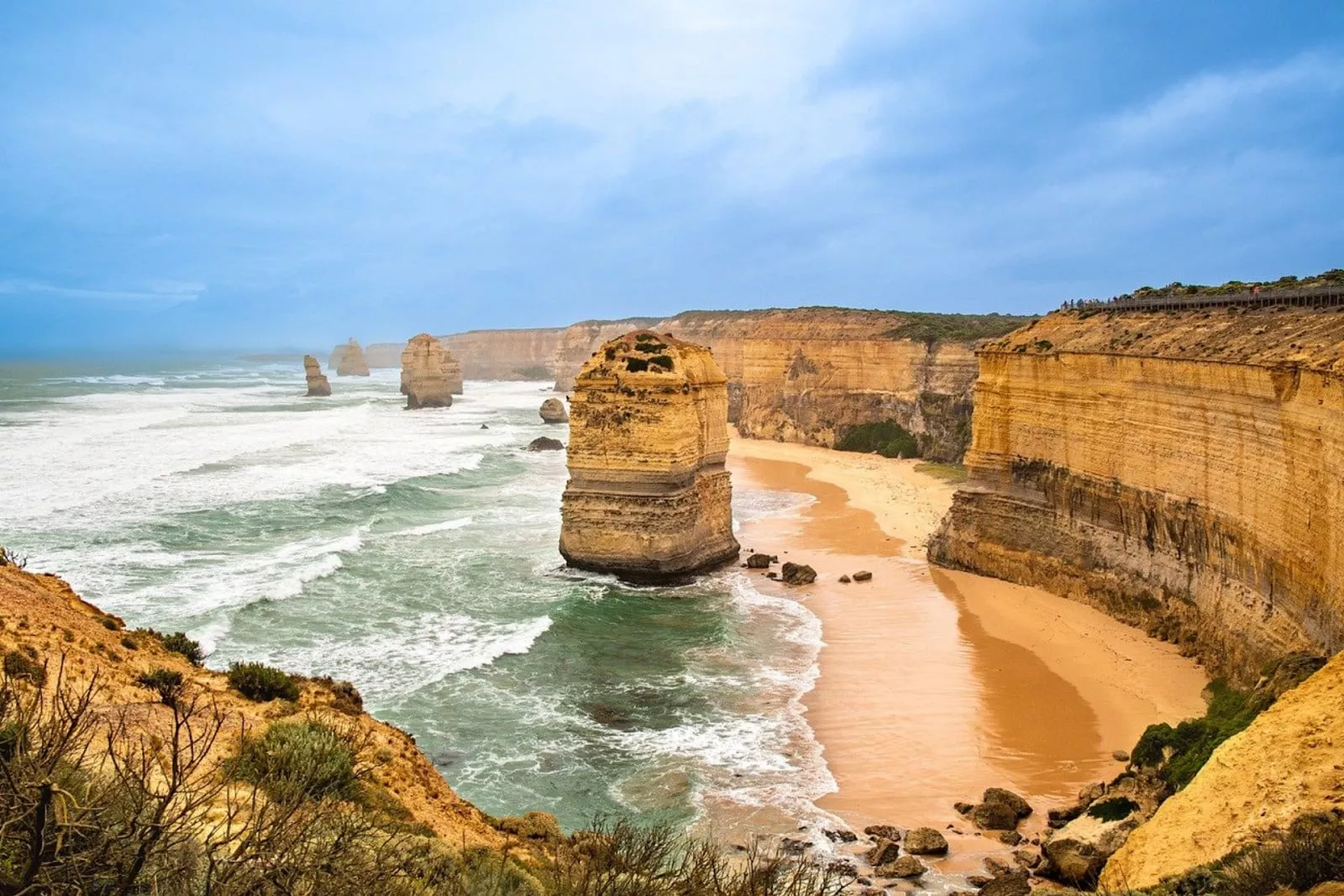
- From there, push on to the Twelve Apostles. Rather than chasing a sunrise arrival (which means leaving before either of the earlier stops make sense), we’d aim to be there by mid-morning, before the tour buses arrive in force but after you’ve had a proper breakfast and enjoyed Maits Rest and Cape Otway without rushing.
- From the Apostles, Gibson Steps is a five-minute drive back the way you came and worth doing before or after, it’s the only spot along this stretch where you can actually walk down onto the beach beneath the cliffs, rather than just looking down from above. Loch Ard Gorge, a few minutes further along, rounds out the day.
What to do
Maits Rest Rainforest Walk
A short, flat, easy loop through towering ferns and ancient trees. A gentle start to a big day.
Cape Otway Lightstation
Australia’s oldest mainland lighthouse, reached via a drive through eucalyptus forest that’s one of the better spots on this whole route for koala spotting. Worth the detour if you’ve got the time; skippable if the day’s already tight.
The Twelve Apostles
The big one, and it lives up to it. Aim for mid-morning rather than midday if you can, the light’s better and the crowds are thinner than they’ll be by lunchtime.
Gibson Steps
A short walk down a set of steps cut into the cliff face gets you onto the beach itself, at eye level with the same limestone stacks you were looking down on minutes earlier. A genuinely different perspective on the same landscape, and one a lot of people miss.
Loch Ard Gorge
Caves, cliffs and a genuinely tragic shipwreck story behind the name. A few minutes from the Apostles and worth the stop.
Where to eat
Koala Kafe
A solid coffee and brekkie stop right by the koala-spotting trail near Cape Otway.
Where to stay
Sow and Piglets Guesthouse
A short drive from the Twelve Apostles with its own microbrewery on-site. Comfortable rooms and a genuinely good pub atmosphere downstairs.
Day 3: Port Campbell to Port Fairy
Distance: 80 km (about 1 hour)
The pace eases off today. This stretch of coast is quieter than what you’ve just driven through, fewer tour buses, fewer crowds at each stop, and it makes a nice contrast before you arrive in Port Fairy itself, a genuinely charming town with more history and character than its size would suggest.
What to do
Bay of Islands
Dramatic rock formations that hold their own against the Twelve Apostles, minus the crowds. A worthwhile stop if you want more of that coastal drama without the queues.
Tower Hill Wildlife Reserve
A wildlife-filled volcanic crater with walking trails and a genuinely good chance of spotting kangaroos, emus and koalas without a fence in sight. The visitor centre also covers the area’s Indigenous history well.
Griffiths Island (Port Fairy)
An easy walk out to the island’s historic lighthouse. If you’re travelling between September and April, this is also where you’ll find one of the best short-eared shearwater colonies on the coast, worth timing a walk for dusk if the season lines up.
Where to eat
Home Grown
Fresh, local, and a good option if you want something wholesome after a few days of road-trip snacking. Good coffee too.
Where to stay
Gardens Caravan Park
Close to the beach and straightforward for anyone travelling by campervan, without the frills (or the price tag) of the guesthouses in town.
Day 4: Port Fairy to Mount Gambier
Distance: 130 km (about 1 hour 30 minutes)
You’ll cross the Victoria-South Australia border today, and the landscape shifts with it. Mount Gambier’s whole appeal is underground and under water, sinkholes, craters and a lake that turns a genuinely striking blue over summer, so this is a day built around a handful of very different natural sights rather than a long list of stops.
What to do
Cape Nelson Lighthouse
A stop near Portland on the way through, with rugged coastal views and, in season, a decent chance of spotting whales offshore.
Blue Lake
The reason most people come to Mount Gambier. The colour shifts with the seasons and is at its most striking over summer. The walking and driving loop around the edge gives you several good lookout points.
Umpherston Sinkhole
Known locally as the Sunken Garden, and it’s exactly that, a collapsed limestone cave now filled with cascading greenery. A short, easy stop that photographs a lot better than it sounds on paper.
Where to eat
Scroll Queen
Cinnamon scrolls done properly, plus a rotating list of other flavours. A good sweet start to the day if you’re passing through in the morning.
Where to stay
Mount Gambier Central Caravan Park
Central, clean, and easy for campervans, a straightforward base for exploring the town’s sights.
Day 5: Mount Gambier to Robe
Distance: 133 km (about 1 hour 45 minutes)
Today you’ll properly get onto South Australia’s Limestone Coast, and the drive itself, through Tantanoola and Millicent, is worth building a little time into rather than treating as a straight transit leg. Robe at the end of it is one of the more underrated small towns on this whole route, a relaxed seaside spot with genuinely good food and a proper campervan-friendly beach to boot.
What to do
Tantanoola Caves Conservation Park
A limestone cave with well-lit stalactites and stalagmites, and a guided tour if you want the full story behind it. A good stretch-the-legs stop early in the drive.
Katnook Estate (Coonawarra)
A short detour into one of Australia’s most respected wine regions. Worth a stop at the cellar door even if you’re just grabbing a bottle for that evening.
Robe on the Beach
Once you’re in Robe, Long Beach is one of the few stretches of sand in the country you can drive a vehicle straight onto. A swim, a picnic, or just parking up to watch the water is the right way to end the driving day.
Cape Dombey
Rugged cliffs and walking trails, with the old Obelisk perched dramatically on the edge for genuinely good ocean views.
Where to eat
Robe Town Brewery
Australia’s only wood-fired brewery, and a good spot for a relaxed evening pint after a day on the road.
Where to stay
Sea Vu Caravan Park
Beachfront and straightforward, a good pick for campervans with clean facilities and ocean views.
Day 6: Robe to Victor Harbor
Distance: 330 km (about 4 hours, the longest driving day of the trip)
This is the day to be realistic about how much you can fit in. There’s a genuinely long list of things worth doing along this stretch, the Coorong, Goolwa, a couple of different wildlife cruises, and Victor Harbor’s own attractions, but between the 4-hour base drive and everything else, you can’t do all of it justice in one day. Here’s how we’d actually spend it.
We’d treat the Coorong as a scenic stop on the way through rather than a full excursion, a short stretch of the boardwalk or a lookout is enough to take in the lagoons and birdlife without derailing the day. Save the fuller experiences, a proper Coorong cruise, Goolwa’s wharf precinct, or the wildlife cruise out of Victor Harbor, for if you’ve built in an extra night here or you’re happy to pick one and let the others go. Once you’re in Victor Harbor itself, the horse-drawn tram across to Granite Island and a walk up to The Bluff for the view over Encounter Bay are the two we’d prioritise with the time you’ve got left in the day.
What to do
Coorong National Park
A brief stop for the lagoons, salt flats and birdlife is worth building into the drive. If you’ve got an extra night to spend here rather than pushing through, the fuller Spirit of the Coorong cruise is a genuinely worthwhile way to see more of it.
The Bluff (Rosetta Head)
A short drive or walk up for panoramic views over Encounter Bay, and on a clear day, out towards Kangaroo Island.
Horse-Drawn Tram to Granite Island
A genuinely unique way to cross the causeway, pulled by Clydesdale horses, with walking trails and a resident little penguin colony to look out for once you’re on the island.
If you’ve got the time: Goolwa’s wharf precinct and the wildlife cruises out of Victor Harbor (seals, dolphins and seabirds) are both worth doing, they just don’t fit alongside everything else on a day with this much driving already booked in.
Where to eat
Nino’s Cafe
An award-winning family restaurant in Victor Harbor itself, solid pizza, pasta and seafood in a lively setting.
Where to stay
Victor Harbor Beachfront Holiday Park
Powered sites, self-contained cabins and a beachfront location that works well for families and campervanners alike.
Day 7: Victor Harbor to Adelaide
Distance: 85 km direct (about 1 hour), longer with a McLaren Vale detour
Your final day is short on paper but worth stretching out. Rather than heading straight up the freeway into Adelaide, we’d route this one through McLaren Vale, one of South Australia’s best-known wine regions and a genuinely good way to close out a week of road-tripping before you hit the city. It adds a bit of driving time, but it’s a far better final approach than a straight run up the highway.
What to do
Granite Island (Victor Harbor)
If you haven’t already done it the evening before, the horse-drawn tram across to Granite Island is worth fitting in before you leave town.
McLaren Vale
A cluster of cellar doors, most within a short drive of each other, make this an easy stop even if you’re not planning a full day of tastings. A glass at one and a light lunch is enough to make the detour worthwhile.
Adelaide Botanic Garden
Once you’re in the city, the Palm House and Amazon Waterlily Pavilion make for a genuinely relaxed way to stretch your legs after the drive.
Adelaide Central Market
Over 70 stalls of fresh produce and multicultural food make this the right place to end the trip, grab a late lunch, stock up for the next leg if you’re continuing on, or just wander.
Where to eat
Adelaide Central Market
Worth a mention twice, once as a sight and once as a meal. Multicultural stalls covering everything from fresh seafood to artisan cheese.
Where to stay
BIG4 West Beach Parks
Just outside the city with powered sites and cabins, a good pick if you’re still in campervan mode and want easy access to Adelaide’s beaches.
Extend your trip: Kangaroo Island
If you’ve got a couple of extra days up your sleeve, Kangaroo Island is worth genuinely considering as an add-on rather than a same-day detour from Victor Harbor. The ferry crossing alone takes the better part of a day once you factor in getting to the terminal, and the island rewards a proper couple of nights rather than a rushed afternoon.
Once there, Hanson Bay Wildlife Sanctuary for seal spotting, Emu Bay’s beach and local produce, and Little Sahara’s sandboarding dunes are all worth the trip. It’s a genuinely different landscape from anything else on this itinerary, wildlife-dense, wine country, and windswept coastline, but it deserves its own dedicated leg rather than being squeezed into the end of a week that’s already covered a lot of ground.

Other things to consider on your Melbourne to Adelaide road trip
Is the Great Ocean Road worth it?
Yes, genuinely. It’s one of the most well-known coastal drives in the world for good reason, and the combination of the Twelve Apostles, the rainforest detours around the Otways, and small towns like Lorne and Port Fairy along the way gives you a lot more variety than a single famous lookout.
What’s the best time of year for this trip?
Spring (September to November): Mild temperatures, wildflowers along the Great Ocean Road, and whale season starting to wind down around Portland and Cape Nelson.
Summer (December to February): The warmest swimming weather, and the Blue Lake at Mount Gambier is at its most vivid this time of year. It’s also peak season, so expect busier stops and higher accommodation prices, especially around the Great Ocean Road.
Autumn (March to May): Our pick if you want fewer crowds without sacrificing decent weather. The coastal towns are noticeably quieter than over summer.
Winter (June to August): Cooler and wetter, particularly along the coast, but the waterfalls around the Otways run fuller and the region’s whale watching season is at its peak.
What’s the climate like along the route?
Expect genuine variation across the week. The Great Ocean Road stretch is coastal and can be breezy and cooler than you’d expect even in summer, while inland toward Mount Gambier and on to Adelaide, it’s drier and warmer. Pack layers rather than committing to one kind of weather for the whole trip.
Should I take a car, campervan or 4WD?
A campervan is genuinely the way we’d do this trip. It doubles as your accommodation for the coastal legs, it’s built for exactly this kind of shorter-hop, multi-stop route, and it means you’re not unpacking and repacking a suitcase at every single overnight stop. A regular car works fine too, since every road on this route is sealed, and you can safely leave the 4WD at home, there’s nothing on this itinerary that needs it. Our guide to finding the best camper for a road trip in Australia is worth a read before you book anything, and our campervan hire in Australia page is where to start comparing options for this route specifically.
What should I pack?
- Sun protection: hats, sunscreen and sunnies for the coastal stretches.
- Layered clothing: coastal breezes and inland heat both feature on this route.
- Snacks and water: especially for the longer Robe to Victor Harbor day.
- A camera or phone: there’s a lot worth capturing along the Great Ocean Road alone.
- Offline maps or GPS: reception isn’t guaranteed the whole way, particularly around the Limestone Coast.
- A first-aid kit and basic tools: standard practice for any longer drive.
For the full rundown, our campervan packing list covers everything else worth bringing.
Is this route family-friendly?
Largely, yes. The daily drives are short enough for younger kids, and stops like Tower Hill Wildlife Reserve, Umpherston Sinkhole and Robe’s drive-on beach all give kids plenty to do beyond sitting in the car. Day 6, with its longer drive, is the one day we’d flag for families specifically, it’s worth building in a couple of proper stretch-the-legs stops along the way rather than pushing straight through.
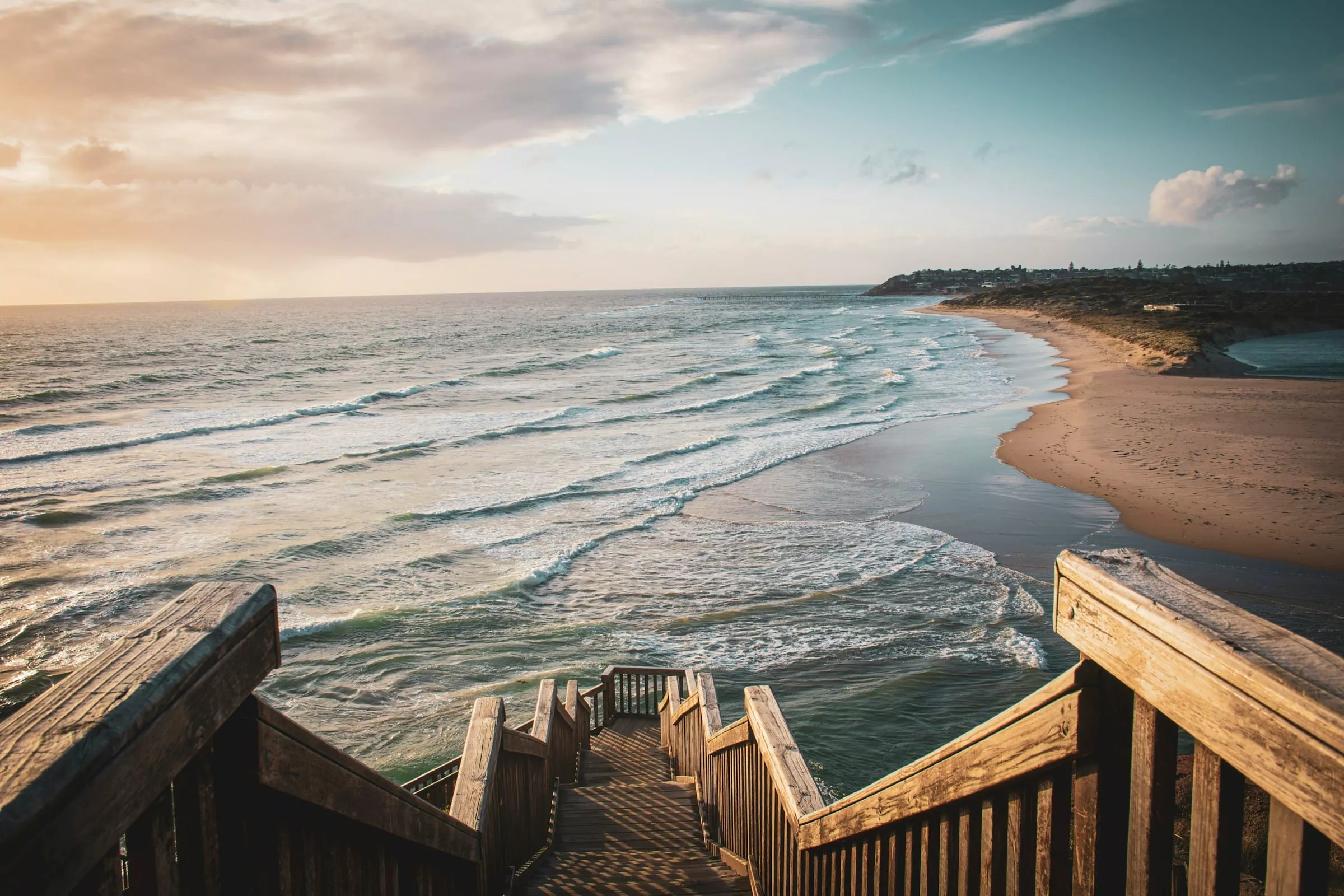
Ready to get moving on your Melbourne to Adelaide roadie?
Seven days, two capital cities, and some of the best coastline in the country in between, this is the route our team keeps recommending because we genuinely think it’s the right way to do this drive. If you’d rather not sort the vehicle side of things yourself, send us your dates and we’ll build you a personalised camper deal for the trip, best price guaranteed. Get in touch with the team and we’ll take care of the rest.
About the Author

with RatPack Travel?

5-Star Google Rated
5-Star Google Rated


Our Customers Say it Best