
Choose your weapon


Your Dates & Locations:
-- > -- -- > -- ---- -- Days
Thanks!
We’re comparing ALL online rates to find you the best campervan deals.
Send us your full name on WhatsApp or Messenger & we’ll do the rest!
.png)

Sit tight
We're finding the best deals for you.
5.0 
3,000+ Google & Facebook reviews

10s
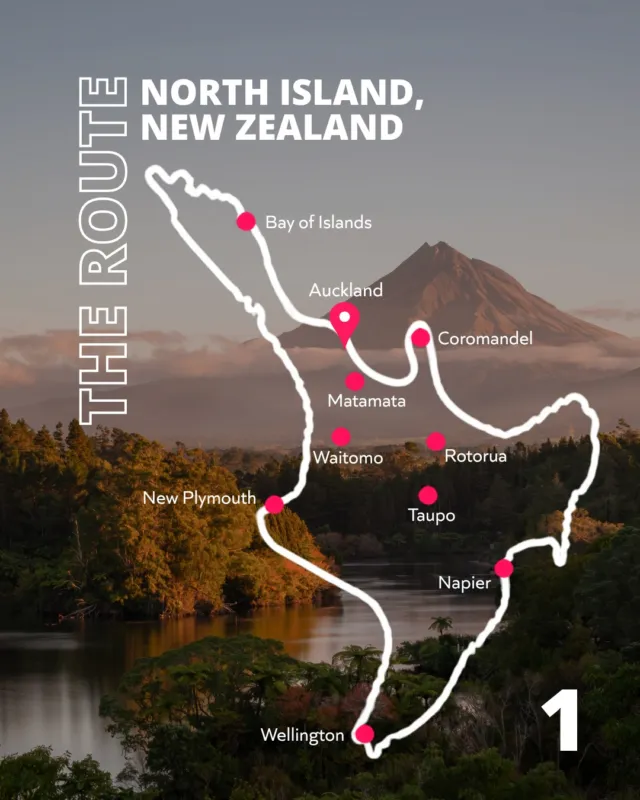
This New Zealand road trip itinerary takes you across both islands in five weeks, from the beaches of the Coromandel to the fiords of the deep south. It keeps the big names you came for, like Rotorua, Tongariro, Queenstown and Aoraki/Mount Cook, and swaps the well-worn middle sections for the Forgotten World Highway, Taranaki, Kaikōura, the Catlins and proper time in Fiordland.
If you’ve read our Auckland to Christchurch road trip itinerary, think of this as the other way around the country. It’s built for a standard 2WD campervan, paced so you spend more time walking than driving, and finishes back in Christchurch for an easy drop-off.
Your 35 Day New Zealand Road Trip Itinerary at a Glance
One clear route, start to finish. You’ll cover roughly 3,500 km of driving plus the Cook Strait ferry, with most driving days under three hours and regular days where the camper stays parked.
| Day | Route | Distance (drive time) |
|---|---|---|
| 1 | Arrive in Auckland | No driving |
| 2 | Auckland to Coromandel Town | 165 km (2.5 hours) |
| 3 | Coromandel Town to Hahei | 85 km (1.5 hours) |
| 4 | Hahei, Cathedral Cove and Hot Water Beach | Local only |
| 5 | Hahei to Rotorua via Karangahake Gorge | 210 km (3 hours) |
| 6 | Rotorua | Local only |
| 7 | Rotorua to Taupō via Wai-O-Tapu | 110 km (1.5 hours) |
| 8 | Taupō to Whakapapa Village | 110 km (1.5 hours) |
| 9 | Tongariro Alpine Crossing | Shuttle to trailhead |
| 10 | Whakapapa to Stratford via the Forgotten World Highway | 200 km (4 hours) |
| 11 | Taranaki Maunga to New Plymouth | 40 km (40 minutes) |
| 12 | New Plymouth to Whanganui via Surf Highway 45 | 175 km (2.5 hours) |
| 13 | Whanganui to Wellington | 195 km (2.5 hours) |
| 14 | Wellington | Local only |
| 15 | Cook Strait ferry to Picton | Ferry (3.5 hours) |
| 16 | Queen Charlotte Track day walk | Water taxi |
| 17 | Picton to Kaikōura via Blenheim | 155 km (2 hours) |
| 18 | Kaikōura | Local only |
| 19 | Kaikōura to Christchurch | 180 km (2.5 hours) |
| 20 | Christchurch to Oamaru | 250 km (3 hours) |
| 21 | Oamaru to Dunedin via Moeraki | 115 km (1.5 hours) |
| 22 | Otago Peninsula | Local only |
| 23 | Dunedin to the Catlins via Nugget Point | 130 km (2 hours) |
| 24 | Catlins waterfalls to Curio Bay | 75 km (1.5 hours) |
| 25 | Curio Bay to Te Anau | 245 km (3.25 hours) |
| 26 | Milford Road and Milford Sound | 240 km return (4 hours) |
| 27 | Te Anau | Local only |
| 28 | Te Anau to Queenstown | 170 km (2.25 hours) |
| 29 | Queenstown | Local only |
| 30 | Queenstown to Wānaka via Arrowtown and the Crown Range | 75 km (1.25 hours) |
| 31 | Wānaka | Local only |
| 32 | Wānaka to Aoraki/Mount Cook via Lindis Pass | 210 km (2.75 hours) |
| 33 | Aoraki/Mount Cook National Park | Local only |
| 34 | Aoraki/Mount Cook to Lake Tekapo | 105 km (1.25 hours) |
| 35 | Lake Tekapo to Christchurch, return your camper | 225 km (3 hours) |
Drive times are minimums. New Zealand roads are narrow, hilly and winding, so add at least 25% for photo stops, slow traffic and the walks you’ll want to do along the way.
A few things shaped this route:
- Day 1 is a rest day on purpose. If you’ve flown in long-haul, give yourself a night in Auckland before collecting your camper. You’ll start the drive fresh and properly enjoy that first stretch of coast.
- The South Island gets the bigger share. Around 15 days in the north and 20 in the south, because the Christchurch, Deep South, Queenstown and Mackenzie loop has the most to see.
- It’s a loop that finishes in Christchurch. One-way hire from Auckland to Christchurch is a popular combination, and Christchurch has a wider choice of camper companies for drop-off than Queenstown.
- Leave some slack. The best moments on a roadie are often the ones you didn’t plan, like a signed walk you spot from the road or a campsite a local tells you about. Build in a spare day or two and you won’t be chasing the schedule.
If you’re starting from scratch, our guide on how to plan your roadie walks you through the basics before you lock anything in.
Days 1-4: Auckland and the Coromandel Peninsula
Day 1: Arrive in Auckland
Day 2: Auckland to Coromandel Town, 165 km (2.5 hours)
Day 3: Coromandel Town to Hahei, 85 km (1.5 hours)
Day 4: Explore Hahei, Cathedral Cove and Hot Water Beach
Instead of heading straight south, this road trip starts on the coast. The drive up the Thames Coast to Coromandel Town is one of the best first-day drives in the country, with the road hugging the Firth of Thames past pōhutukawa trees and tiny bays. From there you cross to the eastern side for white sand, sea caves and kayaking.
What to do?
Maungawhau / Mount Eden, Auckland Auckland is built on a volcanic field, and Maungawhau is the easiest summit to reach for a view across the whole city and both harbours. It’s a good way to stretch your legs after the flight without committing to a big day.
Waiheke Island (optional) If you’ve got an extra day, the passenger ferry from downtown Auckland gets you to Waiheke’s beaches and vineyards in under an hour. Leave the camper on the mainland and get around the island by bus or bike.
Driving Creek Railway, Coromandel Town A narrow-gauge railway built by hand through regenerating native bush, climbing to a lookout called the Eyefull Tower. It’s a quirky, relaxed way to spend your first afternoon on the peninsula.
Cathedral Cove / Te Whanganui-a-Hei The Coromandel’s signature sea arch, with white sand on either side and the offshore islands framed in the middle. Access has changed several times since storm damage in recent years, so check the current DOC advice before you go; the water taxi and guided kayak tours from Hahei are reliable options.
Sea kayaking from Hahei Paddling into Cathedral Cove is better than walking in. Guided trips from Hahei Beach explore the sea caves and marine reserve around Te Whanganui-A-Hei, and no experience is needed.
Hot Water Beach Dig a hole in the sand around low tide and geothermal water fills it up, creating your own hot pool on the beach. Arrive within two hours either side of low tide and hire a spade from the shop if you didn’t pack one.
Shakespeare Cliff Lookout, Cooks Beach A short walk up to one of the best views over Mercury Bay. Go late in the afternoon when the light hits the bay and the beaches below are quiet.
Where to eat?
Ponsonby Central, Auckland A covered food hall with everything from dumplings to wood-fired pizza. Easy for a group where everyone wants something different.
Coromandel Smoking Co, Coromandel Town Smoked mussels, salmon and fish from a local smokehouse. Grab a few things for the camper fridge and you’ve got lunch sorted for a day or two.
Luke’s Kitchen, Kūaotunu Wood-fired pizza and a relaxed, beachy feel on the drive between Coromandel Town and Whitianga. It’s a good stop to break up the day.
Hot Water Brewing Co, Whenuakite A brewery and kitchen at Sea Breeze Holiday Park, a short drive from Hot Water Beach. Solid pub food and their own beers after a day in the water.
Where to stay?
Ambury Regional Park, Auckland A working farm park close to the airport where you can camp among sheep with views across the Manukau Harbour. Bookings are through Auckland Council and it’s a calm first night once you’ve collected your camper.
Shelly Beach Top 10 Holiday Park, Coromandel Town Waterfront powered sites just north of town with sunset views over the harbour. A comfortable base with full facilities for your first night on the road.
Hahei Holiday Resort Right on Hahei Beach and within walking distance of the Cathedral Cove kayak and water taxi departures. Powered sites suit campervans and motorhomes of all sizes.
Hot Water Beach Top 10 Holiday Park A short walk from the beach, so you can time your soak with the tide without moving the camper. It fills quickly in summer, so book ahead from December to February.

Days 5-9: Rotorua, Taupō and Tongariro
Day 5: Hahei to Rotorua via Karangahake Gorge, 210 km (3 hours)
Day 6: Rotorua
Day 7: Rotorua to Taupō via Wai-O-Tapu, 110 km (1.5 hours)
Day 8: Taupō to Whakapapa Village, 110 km (1.5 hours)
Day 9: Tongariro Alpine Crossing
This is the volcanic heart of the North Island. Rotorua gives you geothermal valleys and Māori culture, Taupō gives you the lake, and Tongariro gives you one of the best day hikes anywhere in the country. It’s the one section where we overlap with our other itineraries, because leaving it out wouldn’t make sense.
What to do?
Karangahake Gorge A natural stop between the coast and Rotorua, with river swing bridges, old gold mining relics and the Windows Walk through tunnels cut into the cliff. Bring a torch and give yourself an hour or two.
Hobbiton, Matamata (optional) The Shire film set is a short detour on the way to Rotorua and a highlight for anyone into the films. Tours must be booked in advance, and peak season slots go well ahead.
Te Puia and Whakarewarewa Pōhutu Geyser, boiling mud pools and carving and weaving schools at Te Puia, or a guided walk through Whakarewarewa, a living Māori village where families still cook in the geothermal pools. Either gives you real cultural context, not just scenery.
Redwoods Whakarewarewa Forest Towering Californian redwoods with free walking trails, the Redwoods Treewalk suspended between the trunks, and some of the best mountain biking in New Zealand. Hire a bike in town and spend a few hours on the trails.
Skyline Rotorua Gondola up the hill, then race back down on the luge as many times as your ticket allows. There’s ziplining and mountain biking here too if you want a bit more speed.
Wai-O-Tapu Thermal Wonderland The Champagne Pool, bright orange and green crater lakes, and the Lady Knox Geyser, which erupts at 10:15am each day. Get there early on the way to Taupō to catch the geyser and beat the tour buses.
Ōrākei Kōrako and Huka Falls Ōrākei Kōrako is a quieter geothermal valley reached by a short boat ride, and Huka Falls is the Waikato River forcing itself through a narrow gorge just north of Taupō. Both are easy stops on day seven.
Tongariro Alpine Crossing A 19.4 km one-way hike past steaming vents, the Red Crater and the Emerald Lakes, taking most people six to eight hours. Parking at the Mangatepopo trailhead is limited to four hours, so book a shuttle from Whakapapa or National Park Village, and check the weather forecast the night before.
Taranaki Falls and Tawhai Falls If the weather doesn’t suit the Crossing, the two-hour Taranaki Falls loop from Whakapapa Village and the short walk to Tawhai Falls are both great alternatives. Swap your days around if the forecast looks better later.
Where to eat?
Eat Streat, Rotorua A covered strip of restaurants near the lakefront with geothermally heated floors. Plenty of choice and a good atmosphere in the evenings.
Rotorua Night Market On Thursday nights, Tutanekai Street fills with food stalls and live music. A cheap, easy dinner if your timing lines up.
Huka Prawn Park, Wairakei Catch your own prawns or just order them cooked, with views over the Waikato River. It’s a fun stop close to Huka Falls.
Knoll Ridge Café, Whakapapa New Zealand’s highest café, reached by the Sky Waka gondola up Mount Ruapehu. Check opening days before you go, as it can close for weather.
Where to stay?
Blue Lake Top 10 Holiday Park, Rotorua Across the road from Lake Tikitapu (the Blue Lake) and close to the Redwoods. Great for an early swim or kayak before heading out.
Rotorua Thermal Holiday Park A quiet park on the edge of town with hot pools on site. A solid pick for a relaxed night after a full day of activities.
Reids Farm, Taupō Free riverside camping beside the Waikato River, for certified self-contained vehicles only. It’s popular, so arrive early in summer.
Whakapapa Holiday Park The only holiday park inside Tongariro National Park, a short walk from the visitor centre and shuttle pickups. Expect cold nights at altitude, even in summer.
Mangahuia Campsite (DOC) A simple DOC site on State Highway 47 with views of the mountains on a clear day. A budget option that puts you close to the Crossing.
Days 10-12: The Forgotten World Highway, Taranaki and Whanganui
Day 10: Whakapapa to Stratford via the Forgotten World Highway, 200 km (4 hours)
Day 11: Taranaki Maunga to New Plymouth, 40 km (40 minutes)
Day 12: New Plymouth to Whanganui via Surf Highway 45, 175 km (2.5 hours)
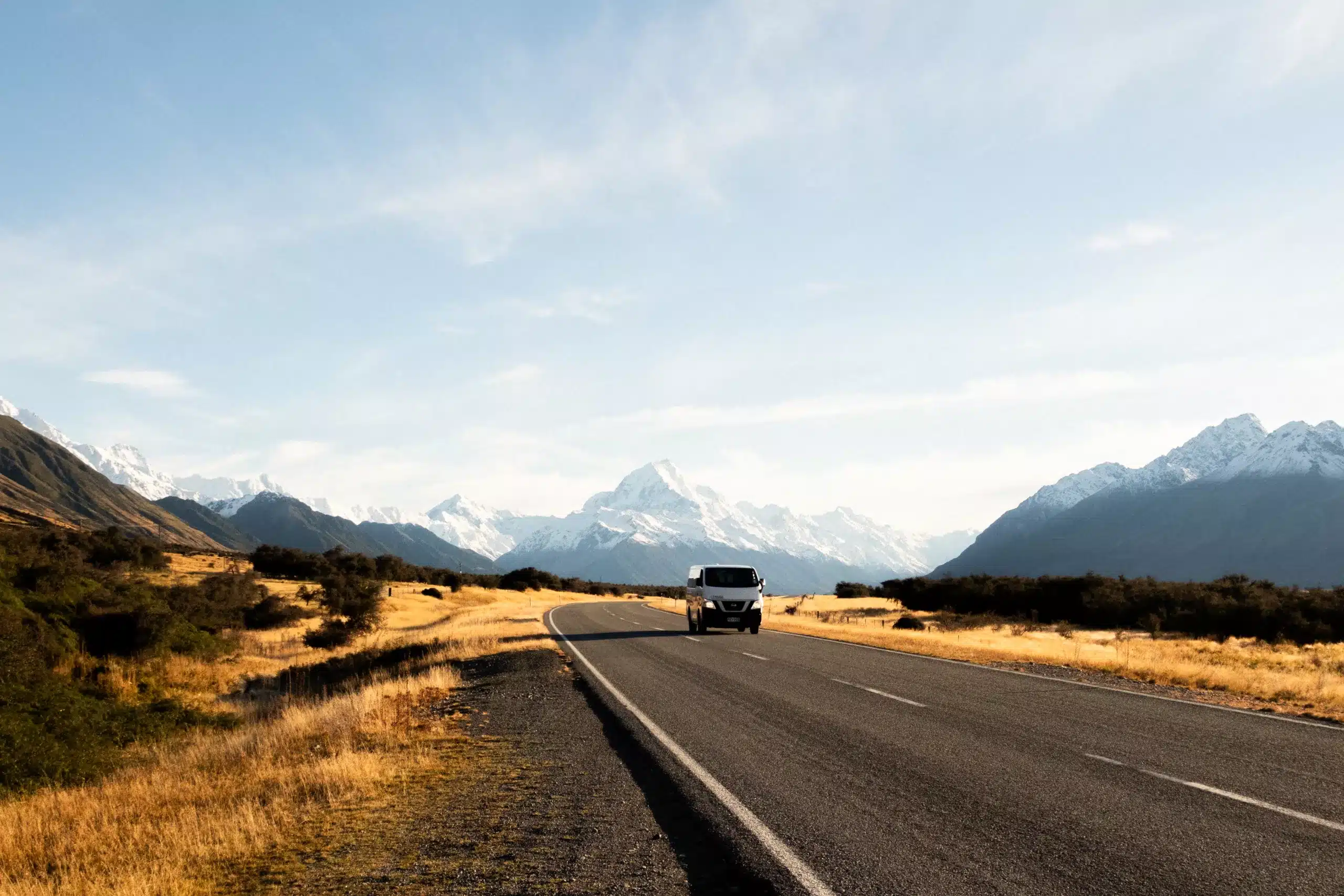
Most itineraries head from Tongariro straight down State Highway 1. We’d rather take the long way through the back country to Taranaki, one of the most underrated regions in the country. You get a remote heritage highway, a near-perfect volcanic cone and a surf coast in three days.
What to do?
Forgotten World Highway / State Highway 43 Around 150 km of winding road between Taumarunui and Stratford, through farmland, saddles, a single-lane tunnel and the Tangarākau Gorge. There’s a section of unsealed road through the gorge and no fuel along the way, so fill up in Taumarunui and check your rental company’s terms before you go.
Whangamōmona A tiny settlement that declared itself a republic in 1989 and still celebrates with a Republic Day every second year. Stop at the hotel, get your passport stamped and soak up the history.
Moki Tunnel A narrow, single-lane tunnel through the hillside, built in the 1930s. It’s one of the most memorable bits of the highway.
Dawson Falls and Wilkies Pools On the southeastern side of Taranaki Maunga, short walks take you to an 18 metre waterfall and a set of smooth natural rock pools carved by the stream. Easy access from Stratford.
Pouakai Tarns The view of Taranaki reflected in the tarns is one of the classic shots in New Zealand. It’s a solid hike from the North Egmont side; go early for still water and the best chance of a clear mountain.
Paritutu Rock, New Plymouth A short but properly steep climb up a volcanic outcrop, with the top section using chains and both hands. The 360-degree view over the port, Sugar Loaf Islands and the mountain is worth the effort.
New Plymouth Coastal Walkway A flat 13 km path along the seafront, crossing Te Rewa Rewa Bridge with the mountain framed through its white arches. Hire a bike and ride the full length.
Surf Highway 45 and Ōpunake The coast road around the western side of Taranaki, with black sand beaches, surf breaks and the mountain on your left most of the way. Ōpunake is a good spot for a surf lesson or a beach walk.
Bridge to Nowhere, Whanganui National Park (optional) A jetboat trip up the Whanganui River, then a walk through the bush to a concrete bridge built for a settlement that was abandoned. Add a day if you want to do this, as the trips run from Pipiriki up the Whanganui River Road.
Where to eat?
Whangamōmona Hotel The pub at the centre of the republic, serving hearty meals and cold drinks. It’s the obvious lunch stop on day ten.
Laurens Lavender, Forgotten World Highway A lavender farm café recommended by travellers for coffee and cake along the route. Check opening hours before you set off, as it’s seasonal.
The Federal Store, New Plymouth A vintage-styled café that’s a New Plymouth favourite for breakfast and good coffee. A great start before the coastal walkway.
River Traders Market, Whanganui A Saturday morning market on the riverbank with local produce, food stalls and crafts. Time your Whanganui stop for it if you can.
Where to stay?
Whangamōmona Campground A basic, friendly campground in the village, ideal if you’d rather slow down and split the highway over two days. Expect simple facilities and a very quiet night.
Belt Road Seaside Holiday Park, New Plymouth On the clifftop above the port, with sea views and an easy walk onto the coastal walkway. A great base for exploring both the mountain and the town.
Ōākura Beach Holiday Park Right on the beach on Surf Highway 45, with surf on your doorstep. A relaxed alternative to staying in New Plymouth.
Whanganui River Top 10 Holiday Park On the river just north of town, with kayaks available and good facilities. It’s a comfortable stop before the run into Wellington.
Prefer the East Cape? Here’s the swap
If you want an even more remote North Island, swap Taranaki for the East Cape. From Rotorua, head to Ōpōtiki and follow State Highway 35 around the cape through Te Kaha, Te Araroa and Tolaga Bay to Gisborne, then down to Napier and back inland to Taupō and Tongariro. Allow at least three to four extra days, as the coast road is slow and the communities along it deserve time.
Highlights include Raukōkore Church on the water’s edge, Tolaga Bay Wharf (one of the longest in the country), and a Ngāti Porou guided sunrise trip up Maunga Hikurangi, the first mainland point in the world to see the sun. Note that the East Cape Lighthouse track has been closed following storm damage, and you can’t drive your camper up Hikurangi yourself, so check access and book guided trips before you go.
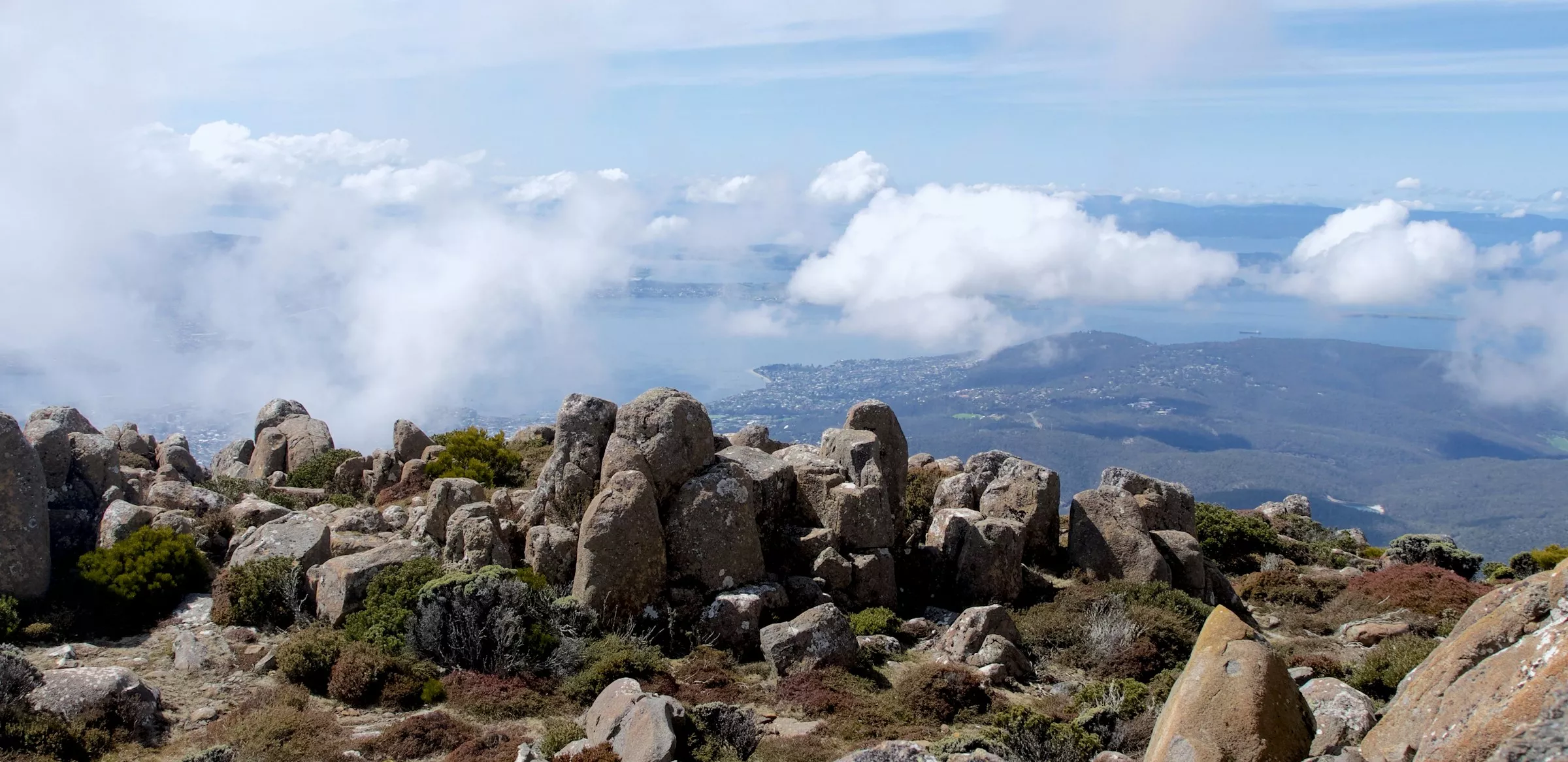
Days 13-19: Wellington to Christchurch via Picton and Kaikōura
Day 13: Whanganui to Wellington, 195 km (2.5 hours)
Day 14: Wellington
Day 15: Cook Strait ferry to Picton, 3.5 hours
Day 16: Queen Charlotte Track day walk
Day 17: Picton to Kaikōura via Blenheim, 155 km (2 hours)
Day 18: Kaikōura
Day 19: Kaikōura to Christchurch, 180 km (2.5 hours)
Wellington is your city break before switching islands, and the ferry across the Cook Strait is part of the trip in its own right. Once you land in Picton, we head south down the east coast instead of west to Nelson, trading glaciers for whales, seals and the mountains dropping straight into the sea at Kaikōura.
What to do?
Kāpiti Island (optional) A predator-free nature reserve off the coast near Paraparaumu, with kākā, takahē and other native birds you won’t see on the mainland. Access is only through approved operators and summer trips need booking well ahead, so add a day if you want to include it.
Te Papa Tongarewa New Zealand’s national museum, with free entry and a brilliant introduction to the country’s natural and Māori history. Allow at least half a day.
Zealandia Te Māra a Tāne A fenced wildlife sanctuary in the hills above the city where native birds have been brought back from the brink. The night tours are a good chance to spot kiwi in the wild.
Mount Victoria Lookout A short drive or walk up for a 360-degree view over the harbour, city and airport. Go at sunset.
Wellington Cable Car and Botanic Garden Ride the cable car up from Lambton Quay, then wander back down through the Botanic Garden into the city. An easy, low-effort half day.
Cook Strait ferry The crossing takes about three and a half hours, and the last hour through the Marlborough Sounds is the best part. Get out on deck as you enter Tōtaranui / Queen Charlotte Sound.
Queen Charlotte Track day walk You don’t need to commit to the full multi-day track to experience it. Water taxis from Picton drop you at one point and collect you at another, so you can walk a single section through the Sounds and be back for dinner.
Marlborough wineries Blenheim and Renwick are home to some of the most famous sauvignon blanc in the world, with plenty of cellar doors close to State Highway 1. Pick a designated driver, or hire bikes and ride between a few vineyards.
Ōhau Point seal colony A roadside stop north of Kaikōura where New Zealand fur seals lounge on the rocks right below the car park. It’s an easy stop on the drive south.
Whale watching, Kaikōura Sperm whales feed in the deep underwater canyon just off the coast, making this one of the most reliable places in the world to see them. Book a morning trip and leave yourself a spare day, as tours can be rescheduled for weather.
Kaikōura Peninsula Walkway A clifftop and shoreline walk with seal colonies, seabirds and views back to the snow-capped Seaward Kaikōura Range. A great free alternative to a paid tour.
Akaroa and Banks Peninsula (optional) A 1.5 hour drive from Christchurch, Akaroa harbour is one of the best places to see Hector’s dolphins, one of the smallest dolphins in the world. Add a night if you have time for a harbour cruise or kayak.
Where to eat?
Wellington Night Market, Cuba Street Friday and Saturday nights, with street food from all over the world. Cheap, lively and the best way to get a feel for the city.
Ortega Fish Shack, Wellington Fresh seafood in a relaxed, quirky setting near Courtenay Place. Worth booking ahead for a sit-down dinner before your ferry.
Picton Village Bakkerij A Dutch bakery near the ferry terminal that’s been a favourite for pies, pastries and coffee for years. Stock up for the walk.
Nin’s Bin, north of Kaikōura A roadside caravan on the coast selling fresh crayfish. You eat it on the rocks with the ocean right in front of you.
Where to stay?
Wellington Waterfront Motorhome Park Powered sites right on the waterfront near the ferry terminal, ideal for an early crossing. It has basic facilities, so think of it as a convenient base rather than a holiday park.
Alexanders Holiday Park, Picton A short drive from the ferry terminal and water taxi wharf, with plenty of space for campers. It’s a simple, good-value stay.
Kaikōura Top 10 Holiday Park Walking distance to town and the whale watch base, with a heated pool and good facilities. Book ahead in summer.
Christchurch Top 10 Holiday Park A well-run park on the north side of the city, close to the airport and the main road south. A good reset night to restock and do some laundry.

Days 20-24: Oamaru, Dunedin and the Catlins
Day 20: Christchurch to Oamaru, 250 km (3 hours)
Day 21: Oamaru to Dunedin via Moeraki, 115 km (1.5 hours)
Day 22: Otago Peninsula
Day 23: Dunedin to the Catlins via Nugget Point, 130 km (2 hours)
Day 24: Catlins waterfalls to Curio Bay, 75 km (1.5 hours)
This is where the route really separates itself from the classic West Coast loop. The east coast is all heritage towns, penguins, albatross and wild beaches, and the Catlins are one of the least crowded and most rewarding corners of the South Island. Most of this section follows the Southern Scenic Route.
What to do?
Oamaru Victorian Precinct and Steampunk HQ Grand limestone buildings, quirky shops and a steampunk museum that’s as strange as it sounds. It’s an easy afternoon wander on arrival.
Oamaru blue penguins Little blue penguins come ashore at dusk at the colony by the harbour. You can watch from the viewing stands, and you might even hear them from your campsite.
Elephant Rocks, Waitaki Whitestone Geopark (optional detour) Huge limestone boulders scattered across farmland inland from Oamaru, plus Māori rock art sites in the Waitaki Valley. It adds a couple of hours return but it’s very different from anything else on the trip.
Moeraki Boulders Large, almost perfectly round boulders sitting on the beach between Oamaru and Dunedin. Visit at low tide for the best access.
Royal Albatross Centre, Taiaroa Head The only mainland breeding colony of royal albatross in the world, at the tip of the Otago Peninsula. A guided tour gets you into the observatory to see them up close.
Otago Peninsula wildlife and Larnach Castle Yellow-eyed penguins (hoiho), fur seals and sea lions all live around the peninsula, best seen on a guided wildlife tour. Larnach Castle and its gardens are a good addition if you want some history.
Tunnel Beach A tunnel carved through the cliff by hand in the 1870s leads down to a secluded beach surrounded by sandstone arches. It’s just south of Dunedin and a perfect stop on the way to the Catlins.
Nugget Point / Tokatā A lighthouse on a narrow ridge above jagged rocky islets, with seals and seabirds below. Stop at Roaring Bay on the way for a chance to see yellow-eyed penguins from the hide in the late afternoon.
Pūrākaunui Falls and McLean Falls Two of the best waterfalls in the Catlins, both reached by short walks through native forest. Pūrākaunui is the classic tiered fall, and McLean is the bigger and more dramatic of the two.
Cathedral Caves Huge sea caves you can walk into at low tide, accessed through private land with a small entry fee. They’re only open roughly two hours either side of low tide and close over winter, so check tide times and the season before you go.
Curio Bay and Porpoise Bay A Jurassic-era fossil forest you can walk across at low tide, plus Hector’s dolphins in the surf at Porpoise Bay next door. Yellow-eyed penguins also come ashore at Curio Bay in the evening; keep your distance and follow the ranger guidance.
Where to eat?
Fleurs Place, Moeraki A seafood restaurant on the wharf at Moeraki, using fish straight off the local boats. Book ahead, especially in summer.
Riverstone Kitchen, north of Oamaru A country restaurant with seasonal food and a beautiful garden. It’s on the drive in from Christchurch and a great lunch stop.
Vogel St Kitchen, Dunedin A café in a converted warehouse in Dunedin’s warehouse precinct, known for wood-fired breakfasts and good coffee. The street art in the surrounding area is worth a wander too.
The Whistling Frog, Catlins A café and bar at the McLean Falls Holiday Park, handy after a day of waterfalls. It’s one of the few places to get a proper meal in this part of the Catlins.
Where to stay?
Oamaru Harbour Tourist Park Right by the harbour, a short walk from the penguin colony and the Victorian Precinct. A local tip: you can hear the penguins at night.
Portobello Village Tourist Park, Otago Peninsula A quiet park on the peninsula, putting you close to the albatross centre and wildlife tours. Much better than staying in the city if wildlife is your focus.
Newhaven Holiday Park, Owaka By the beach at Surat Bay, where sea lions often haul out on the sand. A good, central base for exploring the northern Catlins.
Curio Bay Camping Ground Sites tucked into flax bushes overlooking the ocean, a short walk from the fossil forest and penguins. It’s one of the most memorable campsites on the whole trip.
Pūrākaunui Bay campsite looks perfect on Instagram, but DOC currently advises the site and access road aren’t suitable for campervans. Visit the falls instead and stay at one of the parks above.
Got another 2-3 days? Stewart Island / Rakiura
Rakiura is a ferry ride from Bluff, and more than 85% of the island is national park. It’s one of the best places in New Zealand to see kiwi in the wild, with guided night tours running from Oban. Leave the camper in Bluff, pack a small bag and add two or three nights between Curio Bay and Te Anau.
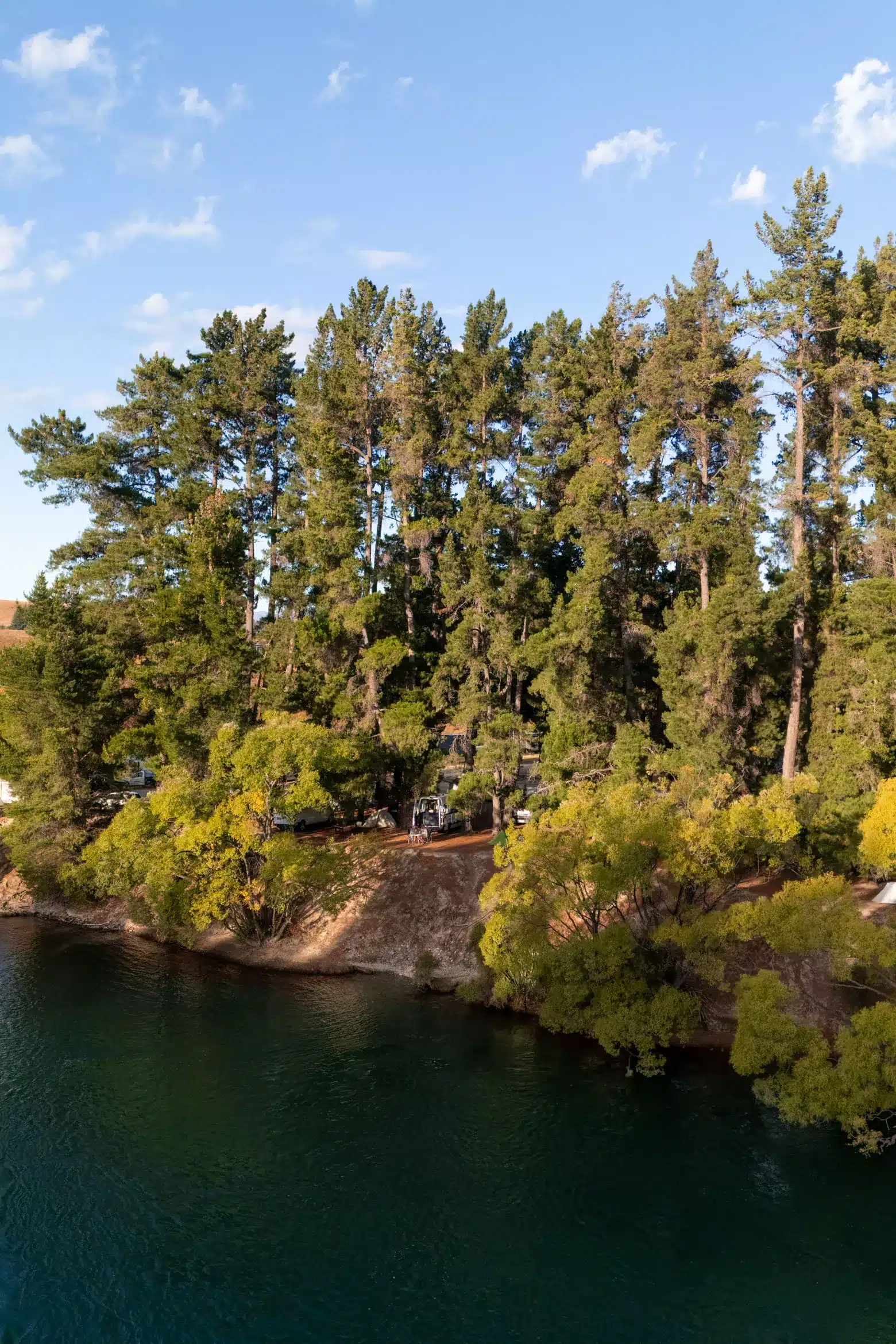
Days 25-27: Te Anau and Fiordland
Day 25: Curio Bay to Te Anau, 245 km (3.25 hours)
Day 26: Milford Road and Milford Sound, 240 km return (4 hours)
Day 27: Te Anau
Most itineraries treat Milford Sound as a long day trip from Queenstown. We think it deserves a proper base, so you can enjoy the Milford Road as a highlight instead of a marathon drive. Te Anau puts you two hours from Milford and gives you a spare day for weather, glowworms or a big hike.
What to do?
Milford Road One of the most beautiful drives in the world, through the Eglinton Valley, past Mirror Lakes and up to the Homer Tunnel. There’s no fuel after Te Anau and chains must be carried during winter, so fill up and check the road status with NZTA before setting off.
Key Summit A side trip from the Routeburn Track at The Divide, climbing to an alpine plateau with views over the Darran and Ailsa Mountains. It’s about three hours return and a great taste of a Great Walk without the overnight commitment.
Milford Sound / Piopiotahi cruise Sheer cliffs, waterfalls and Mitre Peak rising straight out of the water. Book an early or late cruise to miss the midday rush, and don’t let rain put you off, as the waterfalls are at their best after a downpour.
Kayaking Milford Sound Guided kayak trips get you down at water level, often with seals and the occasional dolphin. It’s the more active way to see the fiord.
Lake Marian A short walk takes you to the Marian Falls cascades, and the full track continues up to an alpine lake in a hanging valley. The section beyond the falls is a proper tramping track, so only go on if you’re fit and experienced.
Gertrude Saddle (advanced) Recent campervan travellers rate this as one of the best things they did in the South Island, but it’s for experienced trampers only. DOC describes steep alpine terrain, scrambling and route-finding, and it should only be attempted in good conditions.
Te Anau Glowworm Caves A boat across Lake Te Anau, then a walk and a small boat ride through an active cave system with underground waterfalls and a glowworm grotto. Perfect for a wet day.
Doubtful Sound / Patea (alternative) Quieter and wilder than Milford, reached by boat across Lake Manapōuri and a coach over Wilmot Pass. It’s a longer and pricier day, so choose this if you have the budget and want fewer people around.
Where to eat?
Miles Better Pies, Te Anau A local institution for meat pies, with venison the one to try. Grab a few for the Milford day.
Sandfly Café, Te Anau A small, friendly café for coffee and breakfast before heading up the Milford Road. Get there early in peak season.
Redcliff Café, Te Anau A cosy restaurant in a cottage, serving local produce and wild game. A great choice for a sit-down dinner after a big day.
Your camper kitchen There’s nowhere to buy food along the Milford Road except at the Sound itself, so pack lunch and snacks. Eating at Mirror Lakes beats any café.
Where to stay?
Cascade Creek Campsite (DOC) A beautiful DOC site on the Milford Road, close to Lake Gunn and the Divide. Staying here gets you to Milford early, ahead of the coaches.
Deer Flat Campsite (DOC) A grassy campsite in the Eglinton Valley with mountain views on all sides. Basic facilities, but the setting is hard to beat.
Te Anau Lakeview Holiday Park A large park across from the lake, walking distance to town. It’s a comfortable base with all the facilities you need.
Te Anau Top 10 Holiday Park Right in town, with hot tubs and good kitchen facilities. A solid choice if you want comfort before the drive to Queenstown.
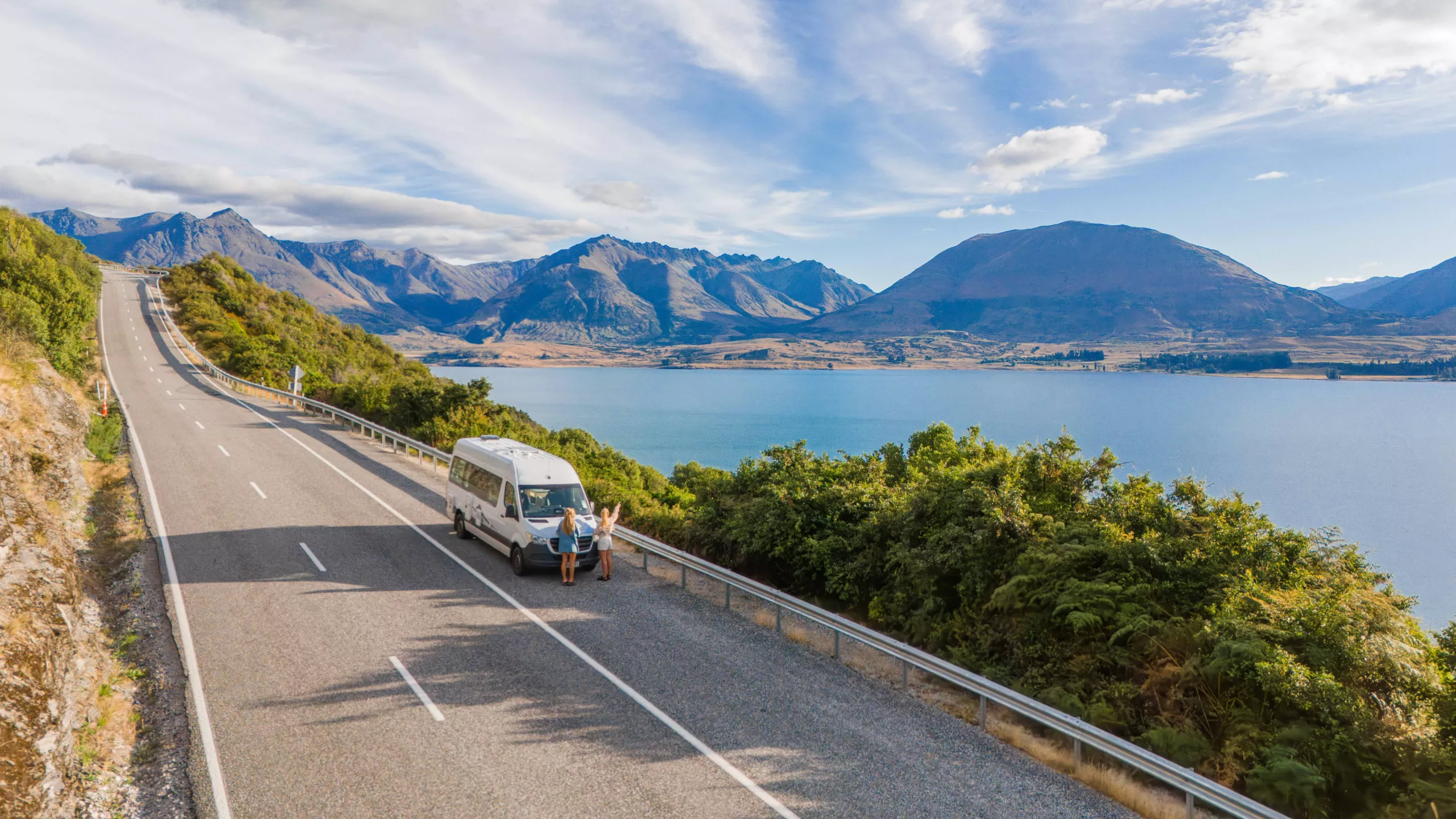
Days 28-31: Queenstown and Wānaka
Day 28: Te Anau to Queenstown, 170 km (2.25 hours)
Day 29: Queenstown
Day 30: Queenstown to Wānaka via Arrowtown and the Crown Range, 75 km (1.25 hours)
Day 31: Wānaka
Queenstown is the adventure capital, and it earns its spot on every New Zealand itinerary. Wānaka is the calmer neighbour with world-class hiking and a lake you can swim in during summer. Together they make a great four days.
What to do?
Devil’s Staircase The road from Kingston to Queenstown winds along the edge of Lake Wakatipu with the Remarkables towering above. Pull over at the lookouts on the way in.
Bungy jumping The Kawarau Gorge Suspension Bridge is where commercial bungy started, and you can still jump from it today. If you want bigger, the Nevis is one of the highest bungy jumps in the world.
Shotover Jet A jet boat speeding through the narrow canyons of the Shotover River, spinning a few metres from the cliffs. It’s fast, loud and a lot of fun.
Skyline Queenstown Gondola up Bob’s Peak for views over the town and lake, then take the luge back down. Stay for sunset.
Glenorchy A 45-minute drive along Lake Wakatipu to a small town at the head of the lake, surrounded by mountains and Lord of the Rings filming locations. Do the short Glenorchy Lagoon Walkway, or hike part of the Routeburn from the eastern end.
Arrowtown A gold rush town with old stone cottages, the Chinese Settlement and the Arrow River. Visit in autumn when the trees turn gold.
Crown Range Road The highest sealed main road in New Zealand, linking Arrowtown to Wānaka with huge views back over the Wakatipu Basin. It’s steep and winding, so take it slow and use the lookouts.
Roys Peak and Isthmus Peak Roys Peak is the famous one, a 16 km return climb to a view over Lake Wānaka that’s all over Instagram. Isthmus Peak is a quieter alternative overlooking both Wānaka and Hāwea; both tracks close for lambing from early October to mid November.
Mou Waho Island A boat trip to a predator-free island in the middle of Lake Wānaka, with a nature walk and native tree planting. It’s a different way to see the lake and give something back.
Wildwire Wānaka Climb up a waterfall on a via ferrata (a protected climbing route using fixed cables and rungs), with options for first-timers through to experienced climbers. A great paid adventure if you’ve already done the bungy.
Where to eat?
Fergburger, Queenstown The famous burger shop, and yes, it’s worth the queue. Order ahead by phone to skip most of it.
Patagonia Chocolates, Arrowtown Handmade chocolates and gelato in the main street. The hot chocolate is the move on a cold day.
Cardrona Hotel A historic hotel on the Crown Range Road with a beer garden and hearty pub meals. It’s the perfect halfway stop between Queenstown and Wānaka.
Big Fig, Wānaka Healthy, generous bowls of salads and slow-cooked meats. Great value and quick if you’re heading out on a hike.
Where to stay?
Twelve Mile Delta Campsite (DOC) A lakeside DOC campsite a short drive from Queenstown, with mountain views and Lord of the Rings history. It’s affordable and much quieter than staying in town.
Queenstown Lakeview Holiday Park A short walk from the town centre and the Skyline gondola. Pricier than most, but the location is very convenient.
Albert Town Campground, Wānaka A council campground beside the Clutha River, a few minutes from Wānaka. Simple, good value and close to the trails.
Glendhu Bay Lakeside Holiday Park On the shores of Lake Wānaka with views to Mount Aspiring, close to the Roys Peak trailhead. One of the best-located holiday parks in the country.
Kidds Bush Campsite (DOC), Lake Hāwea A small lakeside DOC site that recent campervan travellers rate as a trip highlight. It’s basic and first come, first served, so have a backup plan.
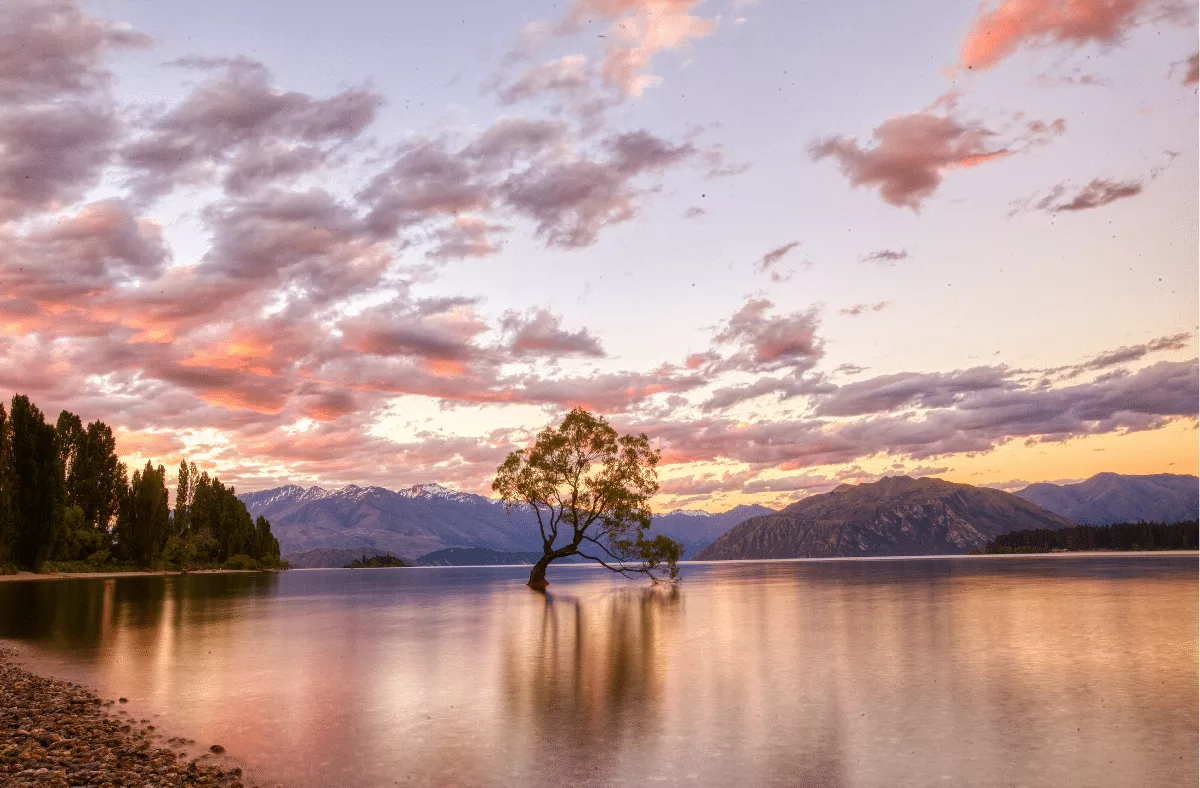
Days 32-35: Aoraki/Mount Cook, Lake Tekapo and Back to Christchurch
Day 32: Wānaka to Aoraki/Mount Cook via Lindis Pass, 210 km (2.75 hours)
Day 33: Aoraki/Mount Cook National Park
Day 34: Aoraki/Mount Cook to Lake Tekapo, 105 km (1.25 hours)
Day 35: Lake Tekapo to Christchurch, 225 km (3 hours)
The last stretch is pure alpine scenery. The Lindis Pass drops you into the Mackenzie Basin, Lake Pukaki opens up with Aoraki straight ahead, and you’ll spend a night under one of the darkest skies in the world. Give Mount Cook a full day and a second night if you can, as the mountain can disappear behind cloud for days at a time.
What to do?
Lindis Pass A high-country pass with golden tussock-covered hills on either side, linking Central Otago with the Mackenzie Basin. Stop at the summit lookout.
Ōmarama Hot Tubs Private wood-fired hot tubs with views of the mountains, a short detour off the main road. Book ahead, especially for an evening soak.
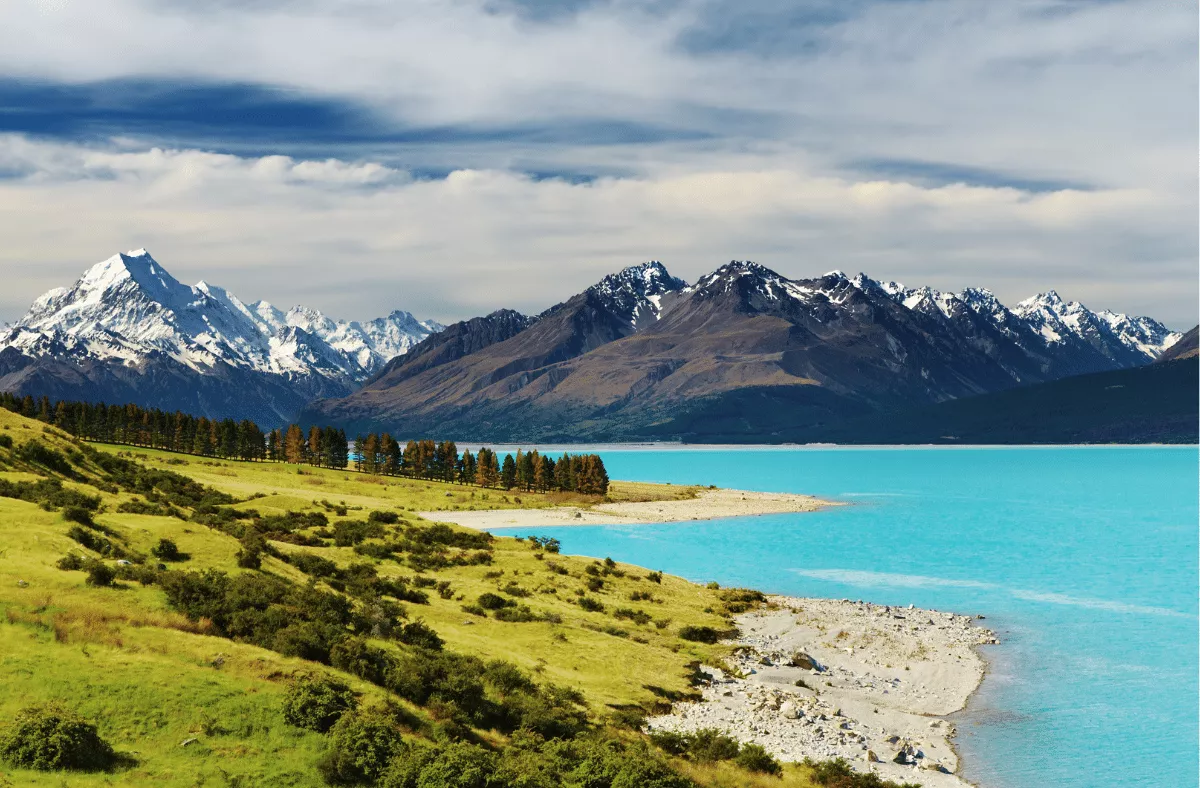
Lake Pukaki and Peter’s Lookout Your first big view of Aoraki across the turquoise water of Lake Pukaki. The road to Mount Cook Village follows the lake for about 55 km, so take your time.
Hooker Valley Track The most popular walk in the park, about 10 km return over three swing bridges to a glacial lake at the foot of Aoraki. Allow three hours and go early or late for fewer people.
Tasman Glacier and Tasman Lake A short climb to a viewpoint over the Tasman Glacier, the longest in New Zealand, and the icebergs floating in the lake below. Boat trips on the lake run in the warmer months.
Sealy Tarns and Mueller Hut Sealy Tarns is a steep climb of around 2,200 steps to small alpine lakes with views across the Hooker Valley. Mueller Hut continues on to an overnight alpine hut and is only for fit, experienced and well-prepared hikers.
Church of the Good Shepherd, Lake Tekapo A small stone church on the shore of Lake Tekapo, with a window framing the lake and mountains behind the altar. Be respectful, as it’s still a working church.
Stargazing in the Aoraki Mackenzie International Dark Sky Reserve Lake Tekapo sits inside one of the largest dark sky reserves in the world, and the night sky here is incredible. Take a guided tour with the Dark Sky Project, or just park up somewhere legal and look up.
Tekapo Springs Hot pools overlooking the lake, a great way to relax after the hiking at Mount Cook. Some evenings run stargazing sessions in the pools.
Mount Sunday / Edoras (optional detour) The filming location for Edoras in The Lord of the Rings, surrounded by high-country scenery. It’s a meaningful detour with unsealed road and small fords near the end, so check your rental terms or join an organised trip from Christchurch.
Geraldine and Fairlie Two small towns on the drive back to Christchurch, good for a break, a pie and a wander. They make the last driving day feel like part of the trip.
Where to eat?
Mt Cook Alpine Salmon, Lake Pukaki A small shop on the shores of Lake Pukaki selling fresh salmon sashimi. Grab some and eat it looking at Aoraki.
The Old Mountaineers’ Café, Mount Cook Village Hearty, home-style food with big windows facing the mountains. A great spot for a post-hike meal.
Kohan, Lake Tekapo A Japanese restaurant with lake views, known for its salmon dishes. A nice change from cooking in the camper.
Fairlie Bakehouse One of the most popular pie stops in the South Island, with the salmon and bacon pie the one people talk about. Expect a queue at lunchtime.
Where to stay?
White Horse Hill Campsite (DOC), Aoraki/Mount Cook Right at the start of the Hooker Valley Track, surrounded by mountains. Check DOC’s current booking system and arrive early in peak season.
Glentanner Park Centre A holiday park on the shores of Lake Pukaki, about 20 minutes from Mount Cook Village. Comfortable facilities and great mountain views.
Lake Tekapo Motels and Holiday Park Lakefront sites a short walk from the Church of the Good Shepherd and the town. The best spot for stargazing straight from your camper.
North South Holiday Park, Christchurch Close to the airport and most camper depots, making your final drop-off easy. A practical last night before you fly home.
Other Things to Consider on Your New Zealand Road Trip
Is this New Zealand road trip itinerary worth it?
Absolutely. In five weeks you’ll see geothermal valleys, two volcanic national parks, a fiord, whales, albatross, penguins and some of the best hikes in the world, all from the same camper. It covers the classic must-sees and some of the most rewarding regions that shorter itineraries skip.
How long do you need for a road trip around New Zealand?
For this route, five weeks is the sweet spot, and four weeks works if you drop the optional extensions. Three weeks means cutting a region; we’d lose Taranaki and Whanganui first, then shorten the Catlins. With two weeks, focus on one island, starting with our Christchurch to Queenstown road trip.
How much time should you spend on each island?
Most travellers spend more time in the South Island, and this itinerary splits it around 15 days north and 20 days south. If you choose the East Cape option, add three to four days to the North Island.
What is the best time of year for a New Zealand road trip?
- Spring (Sep-Nov): Fewer people, lambs in the fields and snow still on the peaks. Some hikes, like Roys Peak, are closed for lambing until mid November.
- Summer (Dec-Feb): Long days, warm weather and the best access to alpine walks. It’s also the busiest and most expensive season, so book campers, ferries and popular campsites early.
- Autumn (Mar-May): Settled weather, golden trees in Central Otago and quieter roads. March is a favourite with experienced travellers for the balance of weather and crowds.
- Winter (Jun-Aug): Great for snow sports around Queenstown, Wānaka and Ruapehu, with cheaper camper rates. Some alpine roads need chains, and the Tongariro Alpine Crossing becomes a guided-only mountaineering trip for most people.
Is it difficult to drive in New Zealand?
It’s very manageable, but give yourself more time than Google Maps suggests. New Zealand drives on the left, and many roads are narrow, hilly and winding with single-lane bridges. Keep at least a two-second gap behind the car in front, double it to four seconds in wet or icy conditions, and pull over when it’s safe to let faster traffic pass.
Do you need a 4WD for this itinerary?
No. The full route is designed for a standard 2WD campervan hire in New Zealand. Some optional detours, like Mount Sunday or the unsealed section of the Forgotten World Highway, should be checked against your rental company’s terms before you go.
Can you freedom camp anywhere in New Zealand?
No. Rules differ between DOC land and each local council, and many roadside spots don’t allow overnight camping. Use an app or council website to check each location, and read our guide on whether you can freedom camp in NZ.
Does your campervan need to be self-contained?
Only if you want to use sites that are restricted to self-contained vehicles. Certified vehicles display a green self-containment warrant, and portable toilets no longer qualify, so choose a camper with a fixed toilet if freedom camping is part of your plan.
What should you book in advance?
Your campervan, the Cook Strait ferry, popular campsites in summer, Hobbiton, Milford Sound cruises, whale watching and any Great Walk huts. Everything else can usually be booked a few days ahead, which keeps your plans flexible.
Can you take a campervan on the Wellington to Picton ferry?
Yes. Both Interislander and Bluebridge carry campervans, but you’ll need your exact vehicle length and height when booking. Some rental companies have their own inter-island policies, so check with them, or ask us and we’ll sort it.
Can you drive in New Zealand on an overseas licence?
Yes, for up to 12 months from your arrival, as long as your licence is current. If it isn’t in English, you’ll also need an approved translation or an International Driving Permit.
Should you do Milford Sound or Doubtful Sound?
Milford is the easier choice for a first visit and fits neatly into this itinerary. Doubtful Sound takes a full day and costs more, but it’s quieter and more remote, so choose it if you’ve got the time and budget.
What should you pack for a New Zealand road trip?
- Layers: Alpine weather can change in an hour, even in summer.
- Waterproof jacket: You’ll use it in Fiordland, guaranteed.
- Hiking boots: Most of the best days on this route involve a proper walk.
- Sun protection: Hats, sunscreen and sunnies, as the UV is strong.
- Snacks and water: Some stretches have no shops for hours.
- Offline maps: Reception drops out on the Forgotten World Highway, in the Catlins and on the Milford Road.
- First-aid kit: Better to have it and not need it.
For the full list, see our campervan packing list, and our top tips for living out of a campervan.
How should you approach Māori place names and culture?
Make an effort with te reo Māori place names, like Aoraki, Piopiotahi and Taranaki Maunga, as they carry real meaning and history. Respect sites of cultural significance, follow local signage and guidance, and choose Māori-led experiences where you can.
Is a New Zealand road trip family-friendly?
Most of this route works well for families, especially the wildlife in Kaikōura, Oamaru and the Otago Peninsula, the geothermal parks in Rotorua and the short walks in Fiordland. The Tongariro Alpine Crossing, Roys Peak and the advanced Fiordland hikes are best left to experienced adults, and shorter driving days with more rest stops will make the trip easier with kids.
About the Author

with RatPack Travel?

5-Star Google Rated
5-Star Google Rated


Our Customers Say it Best