
Choose your weapon


Your Dates & Locations:
-- > -- -- > -- ---- -- Days
Thanks!
We’re comparing ALL online rates to find you the best campervan deals.
Send us your full name on WhatsApp or Messenger & we’ll do the rest!
.png)

Sit tight
We're finding the best deals for you.
5.0 
3,000+ Google & Facebook reviews

10s
The Melbourne to Perth road trip stretches about 3,400 km of highway between Australia’s two most separated capital cities. From dramatic coastal cliffs to flat, endless plains to turquoise bays that rival anything in the tropics, this is a drive that rewards those who take their time with it.
If you are planning a Melbourne to Perth road trip, this itinerary breaks it down into 14 days of comfortable driving on sealed roads. We have mapped it Melbourne to Perth (since that is the direction most people search for), but it works just as well in reverse as a Perth to Melbourne drive.
This is a big trip. But with a bit of planning, it is far more accessible than most people think.
____________________________________________________
Planning a campervan trip?
Share your travel details and we’ll find you the best van, unlock the best deals, and tailor your perfect road trip.
____________________________________________________
Your Epic 14-Day Melbourne to Perth Road Trip Itinerary
Here is a quick overview of the full route before we break it down day by day:
- Day 1: Melbourne to Apollo Bay (190 km)
- Day 2: Apollo Bay to Warrnambool (160 km)
- Day 3: Warrnambool to Mount Gambier (185 km)
- Day 4: Mount Gambier to Adelaide (450 km)
- Day 5: Adelaide (explore day)
- Day 6: Adelaide to Port Augusta (310 km)
- Day 7: Port Augusta to Ceduna (470 km)
- Day 8: Ceduna to Nullarbor Roadhouse (475 km)
- Day 9: Nullarbor Roadhouse to Eucla (295 km)
- Day 10: Eucla to Norseman (475 km)
- Day 11: Norseman to Esperance (200 km)
- Day 12: Esperance (explore day)
- Day 13: Esperance to Albany (480 km)
- Day 14: Albany to Perth (420 km)
Total distance: Approximately 4,110 km (taking the coastal route via the Great Ocean Road and WA’s south coast, rather than the shorter inland highway)
The direct Melbourne to Perth drive distance is around 3,400 km via the fastest inland route. This itinerary adds extra kilometres because the coastal detours at both ends are worth it. If you are short on time, you can skip the Great Ocean Road (cutting Melbourne to Adelaide to one day via the Western Highway) or head straight from Norseman to Perth via Kalgoorlie instead of looping through Esperance and Albany.
Day 1: Melbourne to Apollo Bay
Distance: 190 km (2.5 hours via the Great Ocean Road)
Your Melbourne to Perth drive starts with one of Australia’s most famous stretches of road. Picking up your campervan in Melbourne in the morning gives you a relaxed afternoon on the first half of the Great Ocean Road.
Head south-west towards Torquay, where the Great Ocean Road officially begins. From here, the road hugs the coast through surf towns and rainforest sections all the way to Apollo Bay. Splitting the Great Ocean Road across two days means you can actually enjoy it rather than racing from lookout to lookout.
If you want more time in Melbourne before you leave, we have a full guide on how to spend 5 days in Melbourne and another on the best day trips from Melbourne.
What to do?
Bells Beach
Just past Torquay, Bells Beach is Australia’s most iconic surf break. Even if you do not surf, the lookout above the beach is worth pulling over for. The cliffs frame the water perfectly and on a good swell day you will see surfers lining up from a distance. There is a well-signed car park with room for larger vehicles.
Lorne
Lorne is a lively little coastal town with a good main strip of cafes and shops. It is a natural spot to stretch your legs, grab a coffee, and take a wander along the pier. If you have time, the Erskine Falls walk (a 20-minute return trip from the car park) is a quick and rewarding detour.
Apollo Bay
Apollo Bay sits in a protected bay surrounded by the Otway Ranges and is one of the Great Ocean Road’s most laid-back towns. The foreshore is ideal for a lunch stop, and the town has a great Saturday market if your timing lines up.
For a more detailed breakdown of this stretch, check out our Great Ocean Road guide.
Where to eat?
Apollo Bay Fishermen’s Co-op
Fresh seafood without the sit-down prices. The Co-op at the harbour sells crayfish, fish and chips, and whatever came in that morning. Grab a serve and eat by the water.
Where to stay?
Marengo Holiday Park, Apollo Bay
Just south of town with powered sites, a camp kitchen, and clean amenities. Short walk to the beach and an easy base for the next morning’s drive through the Otways.
Bimbi Park, Cape Otway
A bush campground surrounded by koala habitat, about 20 minutes from Apollo Bay. Powered and unpowered sites with basic facilities. A good pick if you want to spot koalas in the wild.
Apollo Bay Recreation Reserve
A budget-friendly option right in town with basic facilities. Flat sites suitable for campervans and close to everything on the main strip.
Day 2: Apollo Bay to Warrnambool
Distance: 160 km (2.5 hours)
Today covers the most dramatic section of the Great Ocean Road. The road climbs through the Otway Ranges before dropping back to the coast at the Twelve Apostles and the Shipwreck Coast. With a short driving distance, you have plenty of time to stop at every lookout.
What to do?
Twelve Apostles
The Great Ocean Road’s headline act, and they live up to it. These towering limestone stacks sit in surging Southern Ocean surf, and the viewing platforms give you an incredible perspective. Arrive early morning or late afternoon for the best light and fewer crowds. The car park handles campervans without issue.
Loch Ard Gorge
A short drive west of the Twelve Apostles, Loch Ard Gorge is just as dramatic but often quieter. The gorge itself is a narrow inlet surrounded by sheer cliffs, and the steps take you right down to a small sandy beach. There are several walking trails around the clifftops that are well worth exploring.
London Arch
Formerly known as London Bridge (before one of its arches collapsed in 1990), this natural rock formation is another quick stop along the Shipwreck Coast. The remaining arch is impressive, and the viewing area is just a short walk from the car park.
Where to eat?
Proudfoots Boathouse, Warrnambool
Right on the Hopkins River, this restaurant has a relaxed waterside setting and a menu focused on local produce. It is a great option for a meal after a big day on the road.
Where to stay?
Warrnambool Holiday Park
Well-located holiday park with powered sites, camp kitchen, and amenities that are clean and well-maintained. Suitable for campervans and motorhomes with easy access. Close to the town centre and the beach.
Surfside Holiday Park, Warrnambool
Right on the beach with decent facilities including powered sites, a dump station, and a camp kitchen. It fills up during school holidays, so book ahead if you are travelling with family during peak times.
Hopkins River Free Camp
A basic free camp spot by the river on the outskirts of Warrnambool. No power or facilities, but it is flat, quiet, and free. Good for self-contained vans.
Day 3: Warrnambool to Mount Gambier
Distance: 185 km (2 hours)
A short driving day that takes you through the charming fishing village of Port Fairy, across the South Australian border, and into the volcanic landscape around Mount Gambier.
What to do?
Port Fairy
Port Fairy is one of the most picturesque small towns on the Victorian coast. The wide main street is lined with heritage bluestone buildings, and the walk out to Griffiths Island (about 45 minutes around the loop track) takes you through a shearwater rookery. It is the kind of town where you plan a quick stop and end up staying for hours.
Tower Hill Wildlife Reserve
Just west of Warrnambool, Tower Hill is a volcanic crater turned wildlife reserve. Drive or walk around the crater rim and you are likely to spot emus, kangaroos, and koalas in the wild. Campervan access is easy throughout.
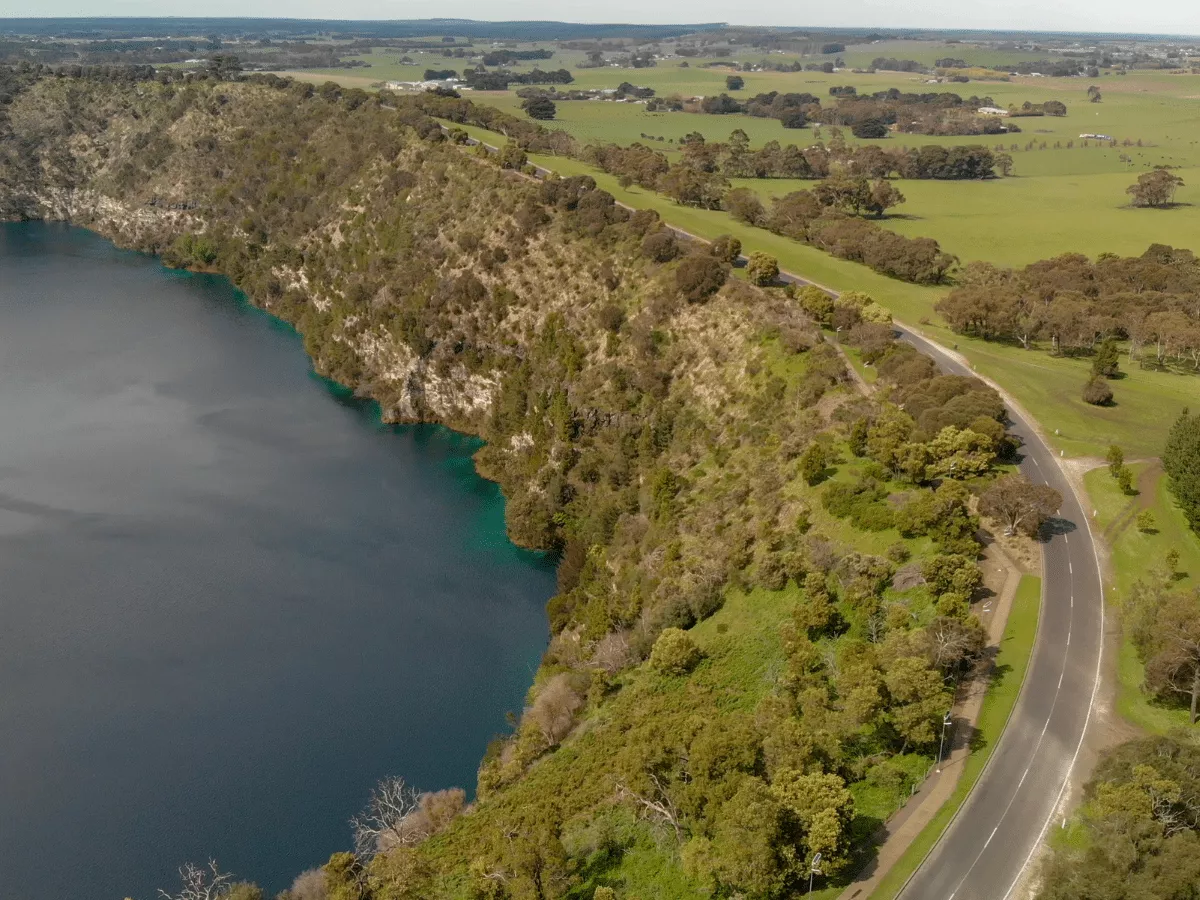
Blue Lake, Mount Gambier
This volcanic crater lake turns an intense cobalt blue between November and March, then shifts to a steel grey for the rest of the year. The walking track around the rim is about 3.5 km and offers good views from multiple angles.
Umpherston Sinkhole (The Sunken Garden)
A limestone sinkhole transformed into a sunken garden with manicured lawns and terraced plantings. Free to visit, and if you come back at dusk, possums come out in large numbers.
Where to eat?
The Barn Steakhouse, Mount Gambier
Set in a converted barn, this place does seriously good steaks and ribs. It is one of Mount Gambier’s most popular restaurants, so booking ahead is a good idea.
Where to stay?
Blue Lake Holiday Park, Mount Gambier
A well-run park within walking distance of the Blue Lake. Powered sites, clean amenities, dump station, and a camp kitchen.
Bellum Hotel Free Camp, Bellum
A small free camp option at a country pub between Port Fairy and Mount Gambier. Basic, but flat and quiet with pub meals available if you want them.
Mount Gambier Showgrounds
The showgrounds offer affordable camping with basic facilities. Central location and suitable for campervans. Check locally for availability, as it can be used for events.
Day 3: Warrnambool to Mount Gambier
Distance: 185 km (2 hours)
A short driving day that takes you through the charming fishing village of Port Fairy, across the South Australian border, and into the volcanic landscape around Mount Gambier.
What to do?
Port Fairy
Port Fairy is one of the most picturesque small towns on the Victorian coast. The wide main street is lined with heritage bluestone buildings, and the walk out to Griffiths Island (about 45 minutes around the loop track) takes you through a shearwater rookery. It is the kind of town where you plan a quick stop and end up staying for hours.
Tower Hill Wildlife Reserve
Just west of Warrnambool, Tower Hill is a volcanic crater turned wildlife reserve. Drive or walk around the crater rim and you are likely to spot emus, kangaroos, and koalas in the wild. Campervan access is easy throughout.
Blue Lake, Mount Gambier
This volcanic crater lake turns an intense cobalt blue between November and March, then shifts to a steel grey for the rest of the year. The walking track around the rim is about 3.5 km and offers good views from multiple angles.
Umpherston Sinkhole (The Sunken Garden)
A limestone sinkhole transformed into a sunken garden with manicured lawns and terraced plantings. Free to visit, and if you come back at dusk, possums come out in large numbers.
Where to eat?
The Barn Steakhouse, Mount Gambier
Set in a converted barn, this place does seriously good steaks and ribs. It is one of Mount Gambier’s most popular restaurants, so booking ahead is a good idea.
Where to stay?
Blue Lake Holiday Park, Mount Gambier
A well-run park within walking distance of the Blue Lake. Powered sites, clean amenities, dump station, and a camp kitchen.
Bellum Hotel Free Camp, Bellum
A small free camp option at a country pub between Port Fairy and Mount Gambier. Basic, but flat and quiet with pub meals available if you want them.
Mount Gambier Showgrounds
The showgrounds offer affordable camping with basic facilities. Central location and suitable for campervans. Check locally for availability, as it can be used for events.
Day 4: Mount Gambier to Adelaide
Distance: 450 km (5 hours)
A longer driving day, but the route through the Limestone Coast passes through beautiful wine country and coastal scenery. You can take the direct inland route via the Dukes Highway (about 4.5 hours) or hug the coast through Robe and the Coorong, which adds time but is the more scenic option.
If you have already done this stretch as part of a Melbourne to Adelaide road trip, you could take the faster inland route and save your energy for Adelaide tomorrow.
What to do?
Robe
A heritage fishing town on the Limestone Coast with excellent beaches and a strong food scene for its size. Long Beach is popular for swimming and walking. It is worth allowing a couple of hours here.
The Coorong National Park
A long, narrow lagoon system stretching over 130 km south-east of Adelaide. The drive along the lagoon is peaceful and the birdlife is exceptional. It is a quiet, contemplative section that contrasts with what comes before and after.
McLaren Vale
If you approach Adelaide from the south, McLaren Vale is right on your doorstep. Over 80 cellar doors and some of Australia’s best shiraz. Our Fleurieu Peninsula guide covers this area in detail.
Where to eat?
Lucia’s Pizza and Spaghetti Bar, Adelaide
An Adelaide institution since the 1950s. No bookings, expect a queue, but it moves fast and the food is consistently excellent.
Where to stay?
Adelaide Shores Caravan Park
Located at West Beach, close to the airport and the city. Powered sites, excellent facilities, and right on the coast. A great option for campervans and motorhomes, with a dump station on site.
Brownhill Creek Caravan Park
Tucked into the foothills south-east of the city, this is a quieter option with a more bushland feel. Powered sites, clean amenities, and an easy drive into the city.
Hahndorf Resort
If you fancy a detour to the Adelaide Hills, Hahndorf is a charming German-heritage town about 20 minutes from the CBD. The resort has powered sites suitable for campervans, and the town’s main street is full of bakeries, pubs, and cheese shops.
Day 5: Adelaide (Explore Day)
After four days on the road, a day in Adelaide lets you recharge, explore, and stock up for the remote sections ahead. Adelaide punches well above its weight for food and wine, and a full day here means you can enjoy it properly.
What to do?
Adelaide Central Market
The place to stock up. Running since 1869, the Central Market is packed with fresh produce, baked goods, cheeses, and ready-made meals. Load up here for the days ahead, because supermarket options become seriously limited after Ceduna.
Glenelg Beach
Adelaide’s most popular beach suburb is an easy tram ride from the city centre. The esplanade is lined with cafes and restaurants, and it is a good spot to stretch your legs and enjoy being stationary for a few hours.
Adelaide Hills
If you are based at Hahndorf, spend the day exploring the Hills. Mount Lofty Summit has panoramic views, and there are cellar doors, orchards, and wildlife parks scattered through the region.
Where to eat?
Peel St, Adelaide
A small bar and restaurant in the city’s west end with a regularly changing menu. Great for something a bit different after days of roadhouse fare (or in anticipation of it).
Where to stay?
Same as Day 4. Keep your spot at whichever park you chose and enjoy the luxury of not packing up the van for a day.
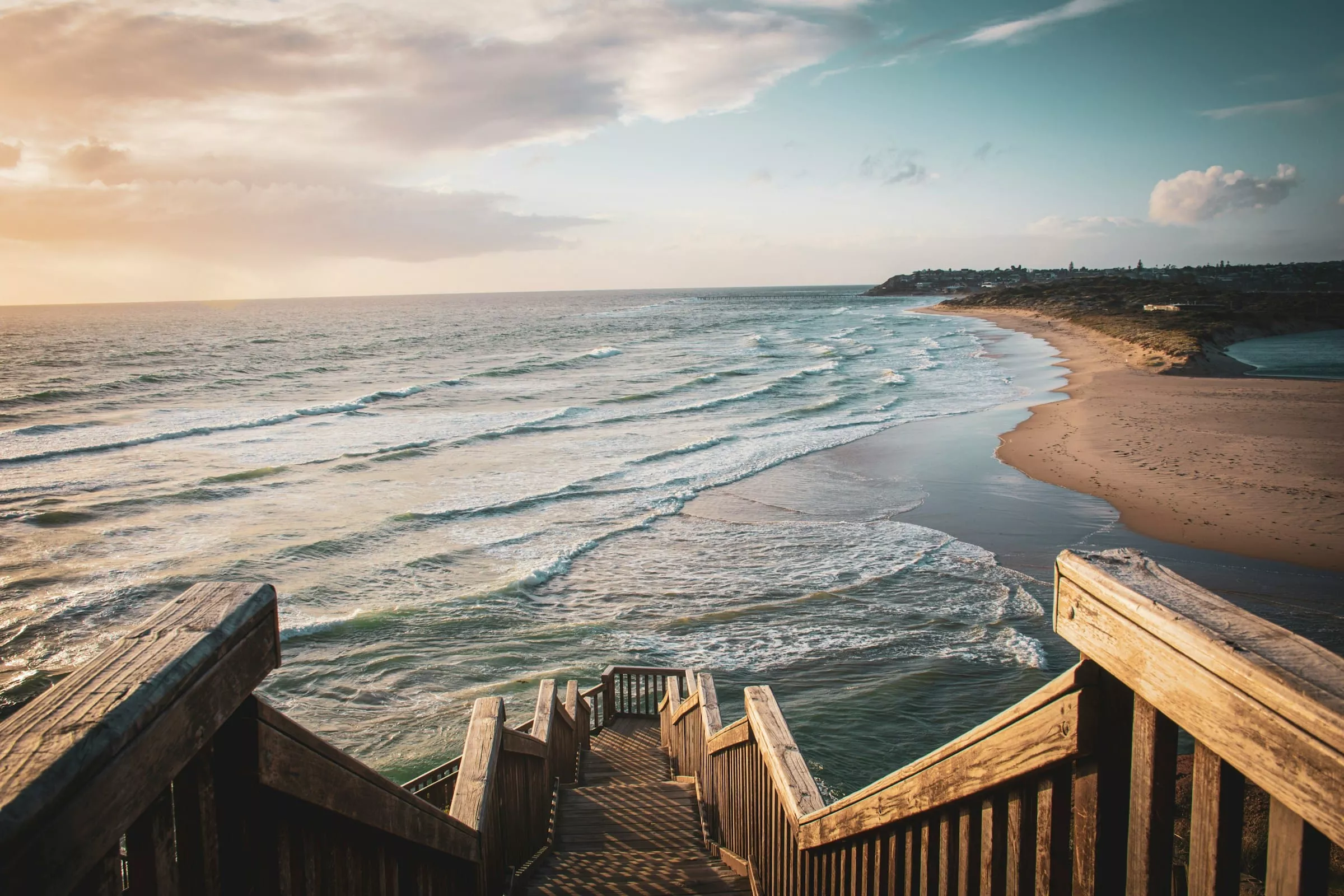
Day 6: Adelaide to Port Augusta
Distance: 310 km (3 hours)
A short driving day heading north through rolling farmland and the mid-north wine regions. Port Augusta sits at the top of Spencer Gulf and is the gateway to the Nullarbor. Use the spare time to top up supplies, fuel up, and get organised for the remote sections ahead.
What to do?
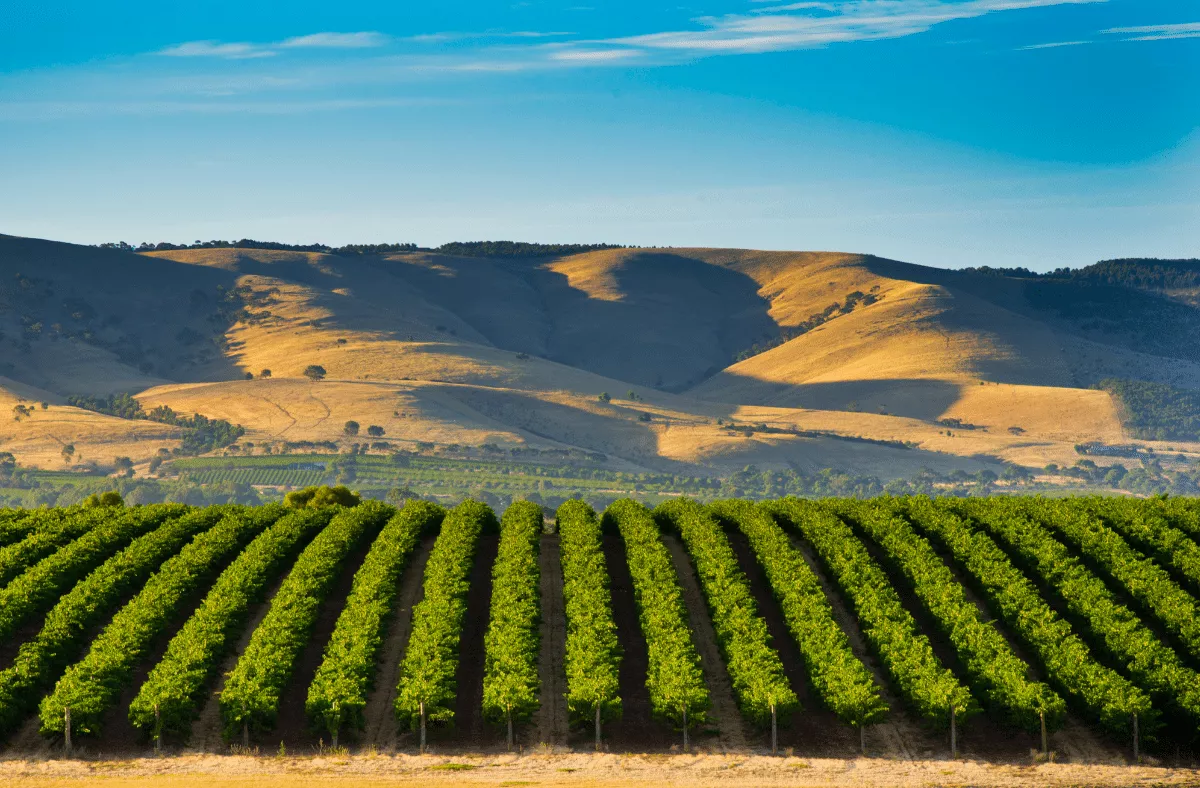
Clare Valley
A renowned riesling-producing region with excellent cellar doors. The Riesling Trail is a 27 km cycling and walking path that connects the wineries, and you can hire bikes locally. A pleasant detour that adds maybe an hour to the drive.
Wadlata Outback Centre, Port Augusta
A good introduction to what lies ahead. Wadlata tells the story of the Australian outback through interactive exhibits covering geology, Indigenous culture, and pastoral history. It gives context to the landscapes you are about to drive through.
Australian Arid Lands Botanic Garden, Port Augusta
Native arid-zone plants across a large site with well-maintained walking trails. The views across Spencer Gulf from the upper paths are excellent. Free entry.
Where to eat?
Standpipe Golf Motor Inn Restaurant, Port Augusta
One of Port Augusta’s more reliable dining options. Pub-style menu with generous servings. Good for a solid meal before the long stretches ahead.
Where to stay?
Shoreline Caravan Park, Port Augusta
Right on the waterfront with powered sites, a camp kitchen, and clean amenities. Easy walking distance to town.
Big 4 Stuart Range Outback Resort
A larger holiday park with a pool, jumping pillow, and good facilities. Suitable for families, with powered sites and cabins. Dump station on site.
Port Augusta East Free Camp
A basic free camp option on the eastern side of town. Self-contained vehicles only. Check WikiCamps for current conditions.
Day 7: Port Augusta to Ceduna
Distance: 470 km (5 hours)
Today the landscape changes in earnest. The towns get smaller and further apart. Ceduna is the last town with a proper supermarket before the Nullarbor, so do your final big supply shop here. Stock up on water, food, and snacks. If you are in a campervan, fill your fresh water tank too.
What to do?
Kimba – Halfway Across Australia
The roadside sign and Big Galah statue are a mandatory photo stop. The bakery does a decent pie if you are passing through at lunchtime.
Wudinna Granite Outcrops
Just off the highway, you can visit impressive granite inselbergs. Pildappa Rock is sometimes compared to a smaller Uluru. A short detour and an unexpected highlight in otherwise flat country.
Ceduna Foreshore
Ceduna sits on the shores of Murat Bay, and the foreshore is a relaxing spot to end the day. Pick up your Nullarbor crossing certificate from the Visitor Centre while you are here.
Where to eat?
Ceduna Oyster Bar
Ceduna is famous for its Pacific oysters, and this is the place to try them. Fresh, local, and affordable. Eat in or grab a dozen for sundowners at the foreshore.
Where to stay?
Ceduna Foreshore Caravan Park
Right on the water with powered sites, a camp kitchen, and clean facilities. Walking distance to town and the oyster bar.
Ceduna Shelly Beach Caravan Park
A quieter option a few kilometres from town, with beachfront sites. Powered and unpowered options, with basic but clean amenities.
Smoky Bay Caravan Park
If you detour to Smoky Bay for the oysters, the caravan park here is small, affordable, and right by the water.
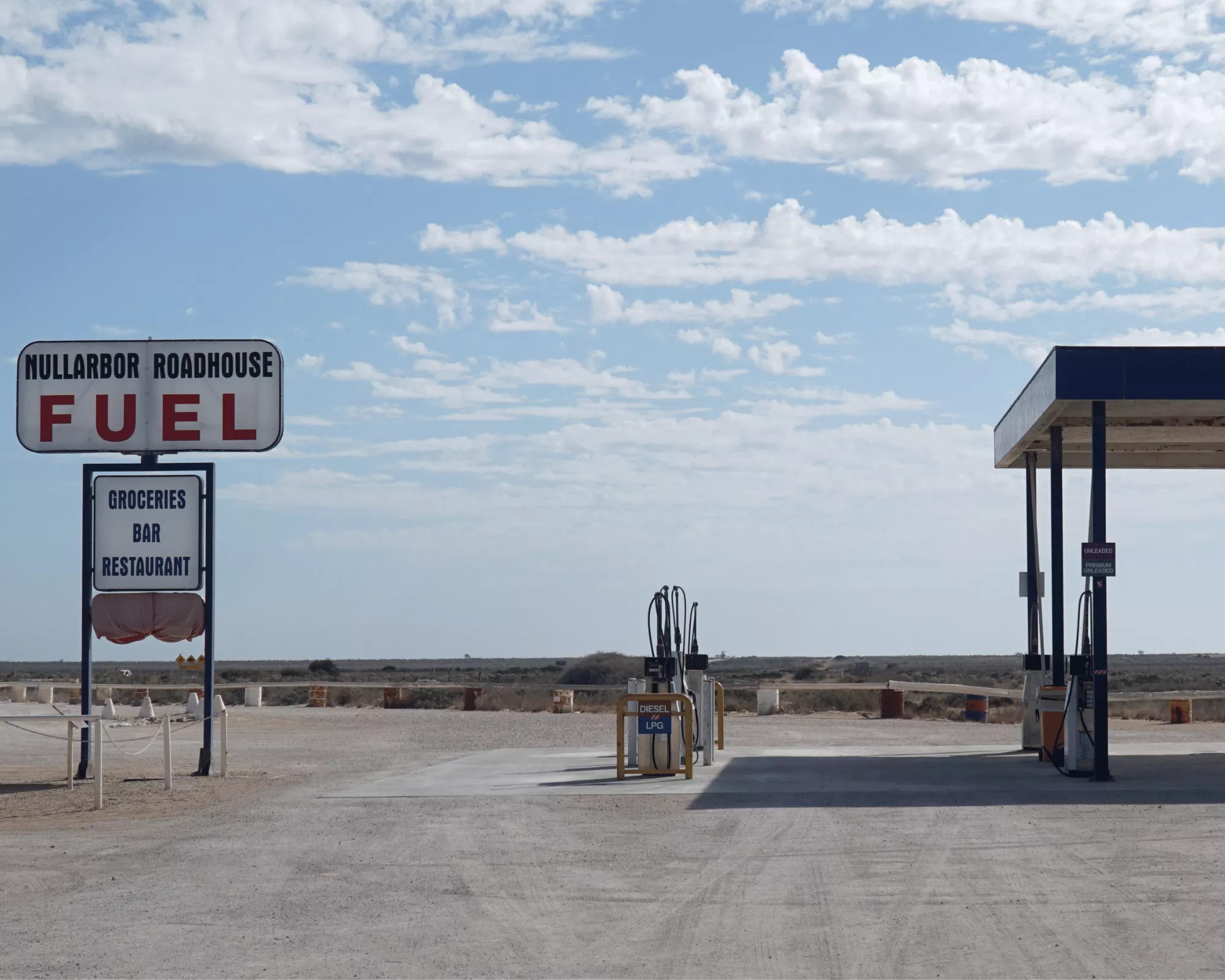
Day 8: Ceduna to Nullarbor Roadhouse
Distance: 475 km (5 hours)
Today you enter the Nullarbor. The landscape shifts from farming country to open, treeless plain. The road is sealed, well-maintained, and easy to drive. The challenge is the distances between services and the sheer scale of the space around you.
Fill your fuel tank in Ceduna before you leave. Fuel prices on the Nullarbor are significantly higher. Top up at every roadhouse opportunity.
From this point on: do not drive at dawn, dusk, or night if you can avoid it. Kangaroos, camels, and wombats are a genuine hazard at highway speed. Road trains are common too – give them plenty of space, do not slow down when they are passing you, and pull well off the road if you want to stop.
What to do?
Penong and the Windmill Museum
A tiny town with a collection of windmills scattered around the outskirts. The bakery is worth a visit for supplies.
Head of Bight
The highlight of the Nullarbor’s South Australian section. Between June and October, the viewing platforms give you a front-row seat to southern right whales nursing their calves below the Bunda Cliffs. Even outside whale season, the Bunda Cliffs are extraordinary – towering limestone dropping straight into the Southern Ocean. The access road is unsealed but well-graded and suitable for campervans.
Nullarbor Links Golf Course
The world’s longest golf course stretches 1,365 km from Ceduna to Kalgoorlie, with one hole at each roadhouse or town. Pick up a scorecard in Ceduna and play each hole as you pass through.
The Bunda Cliffs Lookouts
Multiple signed turnoffs between Nullarbor Roadhouse and the SA/WA border give access to the cliff edge. Each offers a slightly different perspective. Some are right at the edge with no barriers, so keep a safe distance.
Where to eat?
Nullarbor Roadhouse
Burgers, pies, and hot meals. Basic roadhouse fare, but it hits the spot after a long drive. If you are in a campervan, this is where your Ceduna supply shop pays off – pull over at a rest area, set up the camp stove, and enjoy dinner with a view of absolutely nothing in every direction.
Where to stay?
Nullarbor Roadhouse
Powered and unpowered camping sites alongside basic rooms. The facilities are simple, but it is the most established stop in this section. Fuel available.
Head of Bight Campground
A basic campground near the whale watching platforms. No power, but there are toilets. During whale season, falling asleep to the sound of whales breathing is an experience you will not forget.
Nullarbor Free Camps
Several designated rest areas along the highway permit overnight camping. Basic, flat, gravel areas with no facilities, but free and legal. Check WikiCamps for locations.
Day 9: Nullarbor Roadhouse to Eucla
Distance: 295 km (3 hours)
Splitting the Nullarbor crossing across two days makes a big difference. Today is a shorter drive that takes you across the WA border to Eucla, giving you time to stop at lookouts without feeling rushed.
You will cross into WA today, which means a quarantine checkpoint at Border Village. You cannot bring fresh fruit, vegetables, honey, or nuts (unless roasted and sealed) across the border. Fines apply, and they do check thoroughly.
You will also hit a quirky time zone anomaly near the border – Central Western Standard Time, 45 minutes ahead of WA time and 45 minutes behind SA time. Once you reach Norseman tomorrow, you are on WA time.
What to do?
Border Village
The Big Kangaroo statue is a standard photo stop. The roadhouse has fuel, food, and basic supplies. The quarantine inspection happens here.
Eucla and the Old Telegraph Station
The ruins of the Old Telegraph Station are gradually being swallowed by sand dunes, and walking out to them is one of the more atmospheric stops on the Nullarbor. The sand has buried most of the structure over the past century, and what remains is genuinely striking.
Where to eat?
Eucla Motor Hotel
The best food option between Border Village and Norseman. The restaurant serves surprisingly decent meals, and the bar is a welcome sight after a long drive.
Where to stay?
Eucla Motor Hotel Caravan Park
Powered and unpowered sites behind the hotel. Basic facilities, but the location is convenient and you have access to the hotel bar and restaurant.
Border Village Roadhouse Camping
Simple camping at the border crossing. A reasonable option if you want to stop earlier in the day.
Free Camp Rest Areas
Several rest areas between the Nullarbor Roadhouse and Eucla allow overnight stops. No facilities, but flat and legal for self-contained vans.
Day 10: Eucla to Norseman
Distance: 475 km (5 hours)
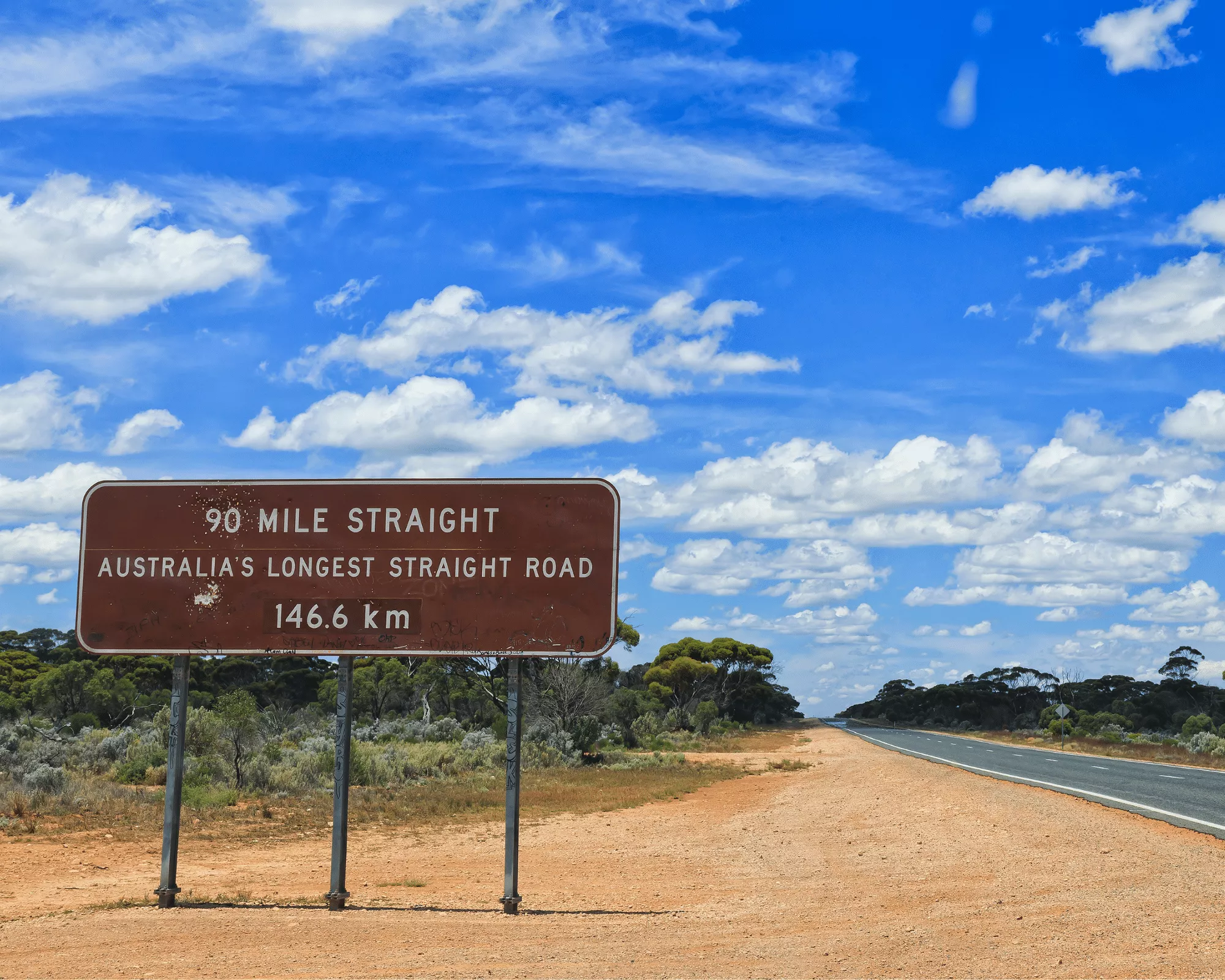
The second half of the Nullarbor crossing takes you through some of the most iconic stretches. The 90 Mile Straight (actually 146.6 km) is the longest straight road in Australia, and watching it disappear into the horizon with not a bend in sight is genuinely surreal.
What to do?
Madura Pass
As you descend Madura Pass, the view opens up across the vast Roe Plains below. After hundreds of kilometres of flat terrain, the sudden change in elevation is dramatic. There is a lookout at the top worth pulling over for.
Balladonia Roadhouse and the Skylab Museum
In 1979, the American space station Skylab scattered debris across this part of WA. The roadhouse has a small museum with pieces of wreckage and displays about the event. Genuinely interesting, and the roadhouse has fuel and food.
Caiguna Blowhole
An air pressure vent in the limestone near Caiguna Roadhouse. The force changes with atmospheric conditions, and on the right day it is quite impressive. A short walk from the roadhouse.
90 Mile Straight
Driving 146.6 km in a dead-straight line is an experience in itself. Road markers count down the distance, and there is a sign at each end.
Where to eat?
Norseman Hotel
Once you reach Norseman, the hotel serves counter meals with more variety than the roadhouses. After a few days of pies and burgers, a proper pub meal feels like a celebration.
Where to stay?
Norseman Great Western Motel and Caravan Park
Powered sites, clean amenities, and a convenient location for restocking and refuelling. A good spot to celebrate completing the Nullarbor crossing.
Fraser Range Station
About 80 km east of Norseman, this outback station stay has campground facilities. If you want one more night under remote skies, this is a great pick.
Balladonia Roadhouse Camping
Unpowered camping with basic facilities. A reasonable overnight option if you want to break the drive into two stages.
Day 11: Norseman to Esperance
Distance: 200 km (2.5 hours)
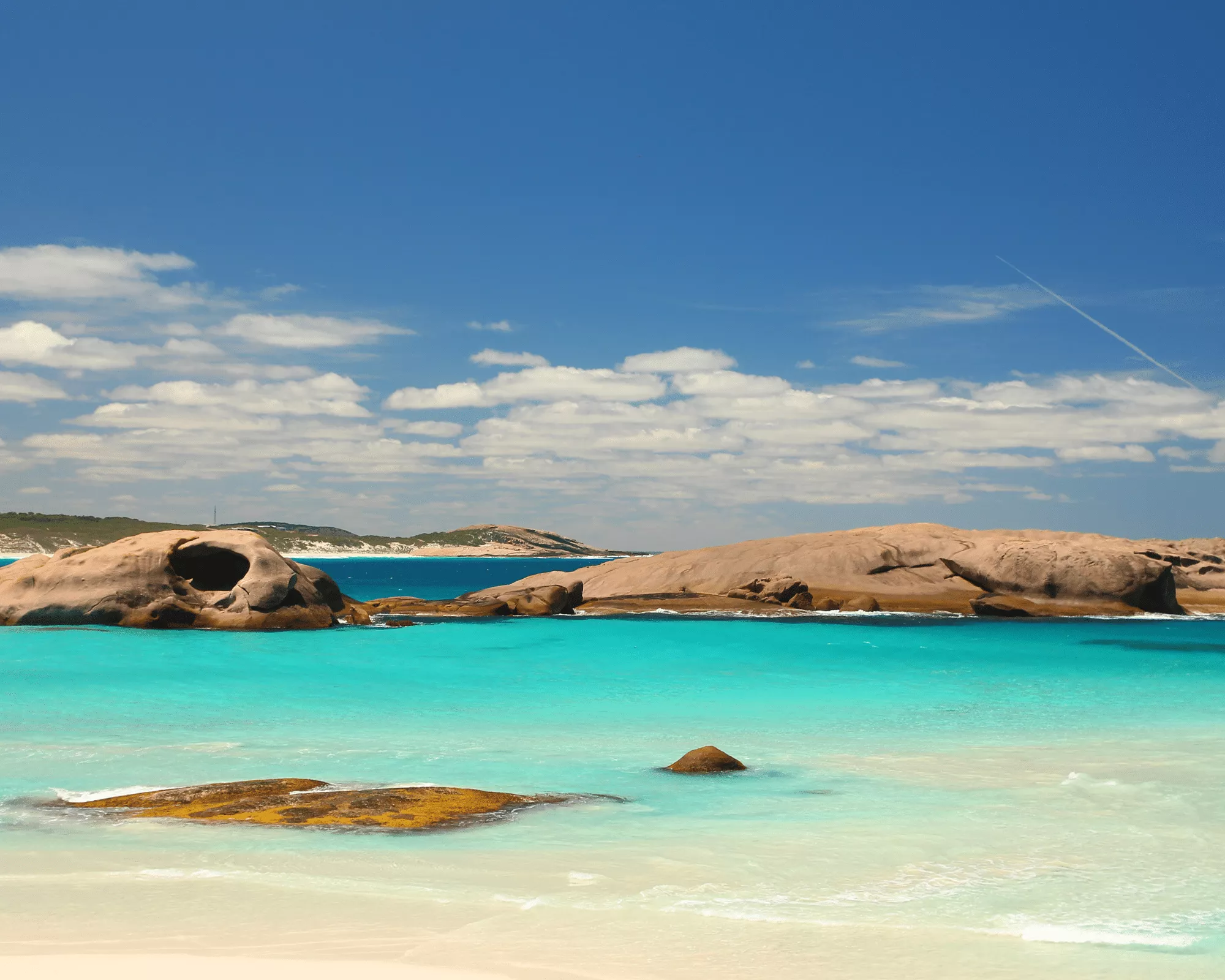
After the Nullarbor, today feels like a completely different trip. The drive south passes through eucalypt woodland before arriving at what many consider Western Australia’s most beautiful coastline. The turquoise water and white sand around Esperance are stunning, and after days of outback, the contrast is something else.
At Norseman, you can head north-west to Kalgoorlie and Perth via the Goldfields Highway (quicker, more outback), or south to Esperance and west along the coast. This itinerary takes the southern route because the beaches are too good to skip.
What to do?
Cape Le Grand National Park
The star attraction around Esperance. Cape Le Grand has a string of beaches that regularly feature on “best in Australia” lists. The Coastal Trail links several of them and can be walked in sections or as a full day hike.
Lucky Bay
Australia’s whitest sand and some of its friendliest kangaroos. Lucky Bay is the kind of place you see in tourism ads and assume it has been photoshopped. It has not. The beach is accessible by 2WD, and there is camping at the nearby campground (my tip – book ahead).
Twilight Beach
Closer to town, Twilight Beach is a gorgeous crescent of sand with a natural rock pool area. Popular for swimming and easy to access.
Where to eat?
Taylor Street Jetty, Esperance
A local favourite on the waterfront, serving fish and chips and seafood that is about as fresh as it gets. The fish tacos are excellent.
Where to stay?
Lucky Bay Campground, Cape Le Grand
Campsites right behind one of Australia’s best beaches. No power, but there are toilets and BBQs. Book through the WA Parks website, as it fills up quickly.
Esperance Bay Holiday Park
Close to town with powered sites, a camp kitchen, and clean amenities. Walking distance to the waterfront and restaurants.
BIG4 Esperance Holiday Park
A larger park with a pool, playground, and excellent facilities. Good for families and anyone wanting comfort after the Nullarbor.
Day 12: Esperance (Explore Day)
Esperance deserves more than a drive-through. A full day lets you properly explore Cape Le Grand, drive the Great Ocean Drive loop, and recover from the Nullarbor.
What to do?
Great Ocean Drive
Esperance’s coastal loop takes you past a series of beautiful bays, lookouts, and the wind farm above town. About 40 km and can be driven in under an hour, but allow longer for stops.
Esperance Stonehenge
A full-sized replica of the UK’s Stonehenge, built from Esperance pink granite. It sounds odd, but it is actually impressive in execution. Worth a quick stop.
More of Cape Le Grand
If you did not get enough yesterday, head back. Hellfire Bay and Thistle Cove are stunning and quieter than Lucky Bay. The Frenchman Peak climb (3 km return, steep in sections) rewards you with panoramic coastal views from the summit.
Where to eat?
Lucky Bay Brewing
A craft brewery on the outskirts of Esperance with a taproom and food trucks. The beers are good, the atmosphere is laid-back, and it is a welcome change from roadhouse drinks.
Where to stay?
Same as Day 11. Another night at your chosen Esperance spot.
Day 13: Esperance to Albany
Distance: 480 km (5 hours)
The South Coast Highway passes through tall karri and tingle forests, along wild coastlines, and through the Fitzgerald River National Park region. Albany, at the end of the day, is one of WA’s most historic towns.
What to do?
Fitzgerald River National Park
One of Australia’s most biodiverse national parks, protecting over 1,800 species of flowering plants. The coastal sections are wild and beautiful, with walking trails along cliff tops and down to secluded beaches.
Bremer Bay
A small coastal town about halfway, and a worthwhile lunch stop. Between January and April, Bremer Bay is a hub for orca encounters, with boat trips running from the harbour.
Torndirrup National Park, Albany
The Gap is a sheer drop to churning ocean, and the Natural Bridge is a natural granite arch. Both are short walks from the car park and genuinely impressive.
National Anzac Centre, Albany
Albany was the departure point for the first Anzac troops heading to Gallipoli in 1914. The National Anzac Centre on Mount Clarence tells the story with interactive exhibits and personal accounts. One of the best military museums in Australia.
Where to eat?
Liberte, Albany
A French-inspired cafe and restaurant on the main strip. Excellent pastries, good coffee, and a lunch menu focused on local produce.
Where to stay?
Emu Beach Holiday Park, Albany
A well-maintained park right on Emu Beach. Powered sites, excellent facilities, and a playground for families.
Waychinicup National Park Campground
A basic bush camping option south of Albany. No power, but peaceful and surrounded by nature.
Cosy Corner Free Camp
A popular free camping spot west of Albany with beach access. Self-contained vehicles only. It fills up during peak periods, so arrive early.
Day 14: Albany to Perth
Distance: 420 km (4.5 hours)
The final day of your Melbourne to Perth drive takes you north through tall timber country, past Walpole and the Valley of the Giants, and into Perth. You can take the direct Albany Highway (about 4.5 hours) or add time by swinging through the south-west forests and Margaret River region.
This is the day it all comes together. You have crossed an entire continent, and driving into Perth with the Indian Ocean ahead of you feels like a genuine achievement.
What to do?
Valley of the Giants Tree Top Walk
Near Walpole, the Tree Top Walk takes you 40 metres above the ground through the canopy of ancient tingle trees. The Ancient Empire boardwalk at ground level is equally impressive. Allow about an hour for both.
Pemberton and the Gloucester Tree
A timber town surrounded by towering karri forest. The Gloucester Tree is a 60-metre fire lookout you can climb via metal pegs hammered into the trunk. Not for everyone, but the views from the top are extraordinary.
Margaret River (optional detour)
If you have a spare day, Margaret River and the surrounding wine region deserves at least a full day. World-class wineries, surf beaches, limestone caves, and excellent food. Well set up for campervan travel.
Fremantle
Rolling into Fremantle on the outskirts of Perth is a fitting end. This port city has a strong arts and food scene, heritage architecture, and the Fremantle Markets (open Friday to Sunday). The Cappuccino Strip on South Terrace is a great spot to sit and reflect on the fact that you just drove across Australia.
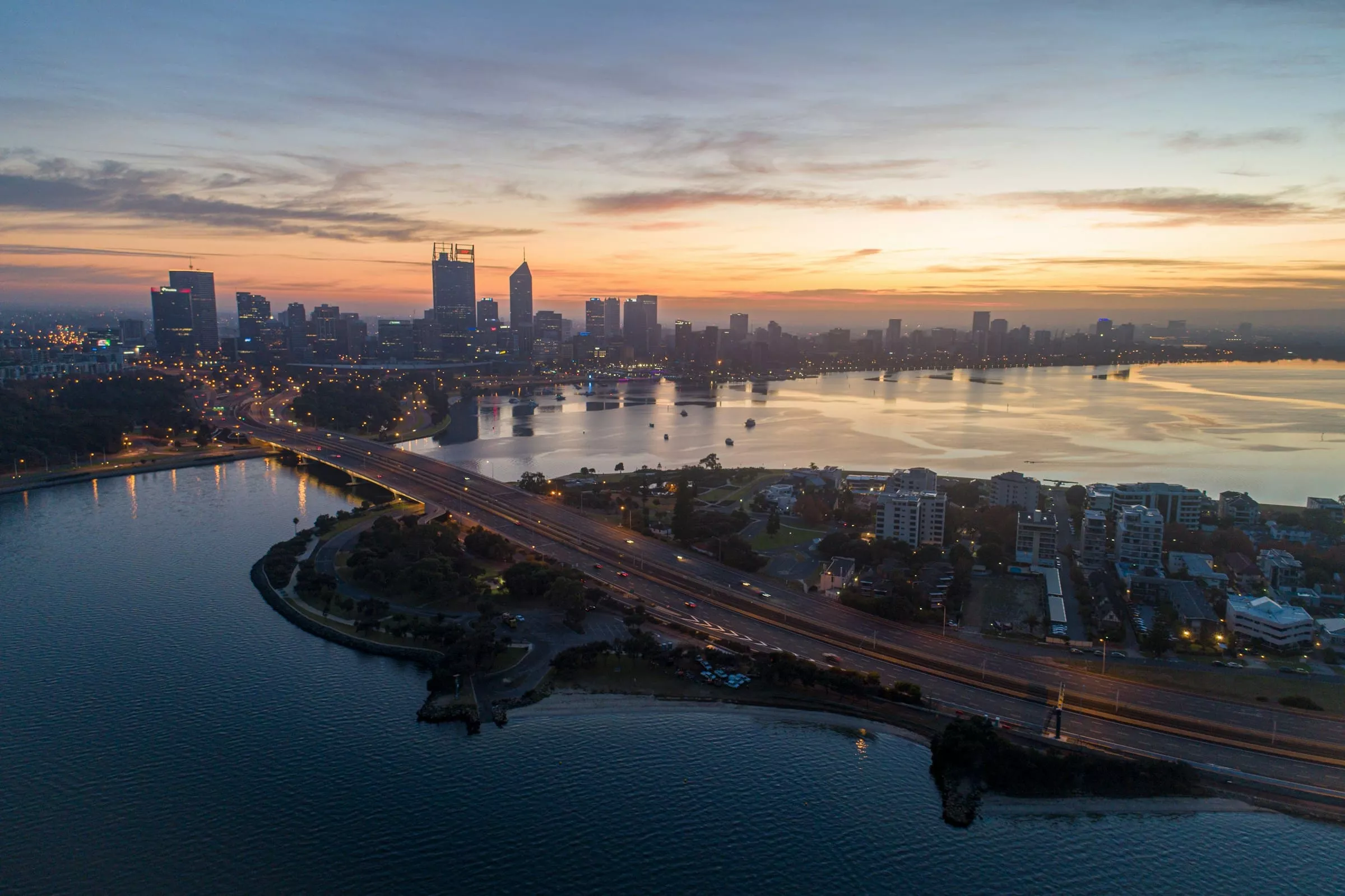
Kings Park, Perth
The park sits on a hill overlooking the city and the Swan River, and the botanic garden is full of WA wildflowers (especially in spring). The views from the war memorial are iconic and a fitting end to an epic road trip.
Where to eat?
Wildflower, Perth
If you want to celebrate the end of the trip properly, Wildflower is a rooftop restaurant with a menu built entirely around WA native ingredients. The views across the river are spectacular.
Where to stay?
If you are returning your campervan in Perth, most rental depots are in the northern suburbs or near the airport. Plan your drop-off time ahead.
Perth Central Caravan Park
Close to the CBD with powered sites and solid facilities. A convenient base for exploring Perth and sorting out your van return.
Coogee Beach Holiday Park
South of Fremantle with oceanfront sites and excellent facilities. A great spot to spend your last night in the van, right on the beach.
Woodman Point Holiday Park
Between Fremantle and Rockingham, this park has a beachside location and good facilities including a camp kitchen, pool, and playground. A solid option for families or anyone wanting a final beach day.
If Perth has you wanting to keep exploring, we have a guide to hiking near Perth that covers some brilliant walks within easy reach of the city. And if you are thinking about continuing north, our Perth to Darwin road trip itinerary picks up where this one leaves off.
Other Things to Consider on Your Road Trip from Melbourne to Perth
Is the route from Melbourne to Perth worth it?
Absolutely. The Melbourne to Perth road trip is one of Australia’s great drives. You get the drama of the Great Ocean Road, the food and wine of Adelaide and McLaren Vale, the raw remoteness of the Nullarbor, and the jaw-dropping beaches of WA’s south coast. Each section feels like a different country. It is a long trip, but the variety keeps it interesting from start to finish.
How long does it take to drive from Melbourne to Perth?
The direct Melbourne to Perth drive time is around 36 to 38 hours of pure driving, covering approximately 3,400 km via the fastest route. This itinerary spreads it across 14 days with detours, bringing the total distance to around 4,110 km. Most people who do the trip properly take between 7 and 14 days, depending on how many stops they want to make. We think two weeks is the sweet spot that lets you see the highlights without feeling rushed.
Can you drive from Melbourne to Perth in a day?
You would need to drive non-stop for about 36 hours, so no. Some people try it in 3 days, but that means extremely long driving days and you will miss everything worth seeing. We would suggest a minimum of 5 to 7 days to make the drive safely and enjoyably.
What is the best time of year to drive from Melbourne to Perth?
Spring (September to November): One of the best times for the drive. Wildflowers bloom across WA’s south coast, temperatures are mild, and whale season overlaps at the Head of Bight (June to October). Roads are generally in good condition and school holiday crowds have not arrived yet.
Summer (December to February): The most popular time for the drive, but temperatures on the Nullarbor can push past 40 degrees Celsius. Start driving early, carry extra water, and be prepared for extreme heat. The WA beaches are at their best for swimming.
Autumn (March to May): Another excellent window. Temperatures cool, autumn colours appear in the Adelaide Hills and south-west WA, and tourist numbers drop. A great time for a quieter trip.
Winter (June to August): Cooler temperatures make the Nullarbor crossing more comfortable, and whale season at the Head of Bight runs from June to October. Southern sections can be cold and wet, particularly along the Great Ocean Road and in Albany. Daylight hours are shorter, which limits driving time if you are avoiding dusk and dawn (as you should).
For a broader look at timing your Australian road trip, check our guide to Australia’s best travel times.
What’s the climate like between Melbourne and Perth?
The route passes through several climate zones. Melbourne and the Great Ocean Road are temperate with cool, wet winters and warm summers. Adelaide is warmer and drier. The Nullarbor is semi-arid with hot summers and very little rainfall. WA’s south coast is temperate, and Perth has a Mediterranean climate. Pack for variety – temperatures can range from single digits at night in winter to 40-plus on the Nullarbor in summer.
Should I rent a car, campervan, or 4WD for a Melbourne to Perth trip?
You do not need a 4WD. The entire route is on sealed roads. That said, a campervan or motorhome is the ideal choice. Accommodation on the Nullarbor is limited and expensive, and having your own bed, kitchen, and water supply gives you flexibility. You save significantly on accommodation and food over two weeks, and you can take advantage of free camping spots across Australia.
If you are weighing up the costs, our guide on how much it costs to hire a motorhome in Australia breaks down what to expect.
What essentials do I need for a Melbourne to Perth trip?
- Sun protection: Hats, sunscreen, sunnies.
- Layered clothing: Coastal breezes by day, chilly nights inland.
- Snacks and water: Especially on the Nullarbor where shops are scarce.
- Camera/phone: For capturing the views.
- Maps or GPS: Download offline maps before you leave Adelaide.
- Reusable bags: For market finds and snacks.
- First-aid kit and tools: Essential in remote areas.
- Spare tyre and basic car tools: Non-negotiable for the Nullarbor.
- Jerry can (optional): Extra fuel adds peace of mind if your tank is smaller.
- Insect repellent: Flies can be relentless on the Nullarbor.
For a full rundown, check our campervan packing list.
Is a Melbourne to Perth road trip family-friendly?
It can be, but it requires more planning than a shorter coastal road trip. The Nullarbor involves long driving days with limited stops, which can be challenging for younger kids. That said, families do it regularly. Keep driving days realistic (4 to 5 hours max with young children), build in stops for them to run around, and stock up on activities and snacks before the remote sections. The Great Ocean Road and WA’s south coast are both excellent for families.
What happens if I break down on the Nullarbor?
Roadside assistance is available but response times can be long. Make sure your vehicle is in good condition before you leave, and check that your roadside assistance covers remote areas. Most roadhouses can help with basic mechanical issues, and Telstra reception is available at most roadhouses. Carry enough water and food for at least 24 hours beyond what you think you need. The Royal Flying Doctor Service covers the area for medical emergencies.
Is there phone reception on the Nullarbor?
Telstra has the best coverage, with reception at most roadhouses and some stretches in between. Optus and Vodafone have very limited or no coverage between Ceduna and Norseman. Consider a Telstra prepaid SIM or a satellite phone for the crossing. Download maps, podcasts, and music before you leave Ceduna.
Ready to Get Moving on Your Melbourne to Perth Roadie - Let's Go!
Three states, approximately 4,100 km, and 14 days of driving that take you from the surf-battered cliffs of the Great Ocean Road to the white sand beaches of Lucky Bay, with the raw, open expanse of the Nullarbor in between. The Melbourne to Perth drive is a road trip that stays with you long after you have returned the keys.
Whether you are doing the full coastal route from this itinerary or trimming it to suit your timeframe, the best way to experience it is in a campervan. You set your own pace, pull over when the view demands it, and camp in places that no hotel could match.
About the Author

with RatPack Travel?

5-Star Google Rated
5-Star Google Rated


Our Customers Say it Best