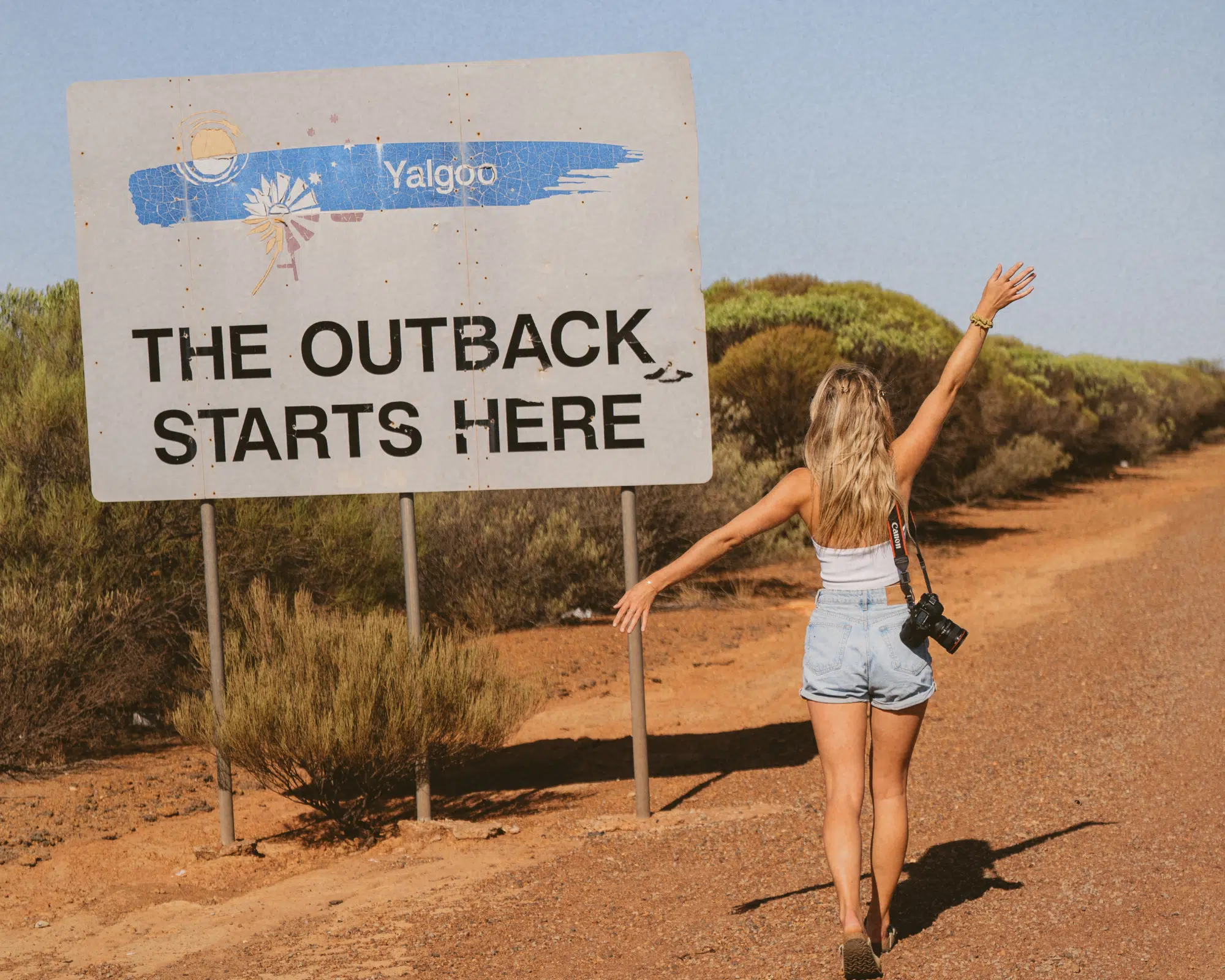
So you’re thinking about taking on the Aussie outback? Yewww, what a shout 🙌
From wide open roads and red dirt tracks to roadhouse feeds and skies full of stars, this kind of trip hits different. But before you charge off into the desert with a bag of Shapes and half a tank of fuel… there’s a few things you seriously need to know.
Because the outback is beautiful, wild, remote, and absolutely not the place to rock up unprepared.
This guide is your no-fluff, all-vibes rundown on how to get sorted before you roll. We’ll cover the gear, the safety bits, the apps you’ll actually use, and all the tips our crew swear by from years of dusty roadies.
Whether you’re in a camper, a car, or anything with wheels, we’ve got your back.
Let’s get you prepped, packed and ready to rip into one of the most epic road trips on the planet.
Let’s gooooooo 🛻🔥
Before You Hit the Road: Vehicle Prep 101
Alright ya legend, if you’re heading into the Aussie outback, this ain’t your average roadie along the coast. We’re talking big distances, hot temps, and no servo for hundreds of k’s in some spots. Before you hit that red dirt, give your camper some TLC so it doesn’t pack it in halfway through the trip.
Book in a Full Service
Whether you’re in a camper, a car, or anything in between, get it sorted before you roll out. That means a proper service with all the bits: oil, brakes, filters, coolant, tyres, the whole lot.
Hiring? Ask the rental crew when it was last serviced and check it’s got all the gear, including a spare tyre that’s actually usable. Don’t assume it’s all good, ask the questions now, not when you’re steaming in the middle of nowhere.
Tyres: Respect the Rubber
Outback roads are harsh, potholes, loose gravel, scorching heat, your tyres are gonna cop it. Here’s what to check:
- Tread and pressure on all four tyres plus your spare
- Make sure you’ve got a jack and wheel brace in the van (and know where they are!)
- Learn how to change a tyre before you head out, YouTube it now, thank us later
If you’re heading anywhere off the bitumen (or just wanna play it safe), chuck in a second spare tyre. That move alone could save your roadie.

Radiators, Belts & Hoses, Boring But Big Time Important
Boring? Maybe. Important? 100%.
- Flush and refill your radiator with clean coolant
- Check your fan belt for any cracks or looseness
- Inspect all hoses for wear or leaks
- Make sure your fuel and temp gauges actually work
This stuff keeps your engine alive in the heat, ignore it and you’re asking for trouble.
Know What Your Ride Can Handle
Most main roads are sealed and sweet for 2WDs and campers. But if you’re eyeing up something like the Gibb River Road, Great Central Highway, or the Plenty Track, don’t even think about it without a proper 4WD.
Short version:
- 2WD? Stick to sealed roads or the easy gravel stuff
- If a road is marked 4WD only, believe it
- And please… don’t trust Google Maps with shortcuts out here. Just don’t.
Not sure what kind of ride is right for your outback mission? Hit us up here and we’ll help you suss the perfect wheels for your roadie. Yewww 🙌
Plan Your Route (and Plan a Backup Too)
The outback might look like one big open playground, but without a solid route (and a backup plan), you’re setting yourself up for a proper stitch-up. There’s long stretches of nothing, signal can vanish in a flash, and Google Maps… well, it’s not always your mate out here.
Download Maps That Don’t Rely on Signal
Once you leave the towns behind, your phone signal will drop off faster than you think, so don’t just wing it.
Here’s how to stay ahead of the game:
- Download offline maps before you go, we rate Wikicamps, HERE WeGo, and Maps.me
- Screenshot your stops and directions
- And yep, pack a paper map, still the most reliable backup going
There’s nothing worse than getting halfway into the outback and realising your nav’s turned into a loading screen.
Don’t Rely on Google to Get You There
It might be spot-on in the city, but out here? Google’s cooked.
It’ll send you down roads that don’t exist, can’t tell if something’s 4WD-only, and has zero clue what kinda wheels you’re driving. If it shows you a “shortcut” through the middle of nowhere, hit the brakes and re-think it.
Golden rule? If you’re not sure, don’t risk it.
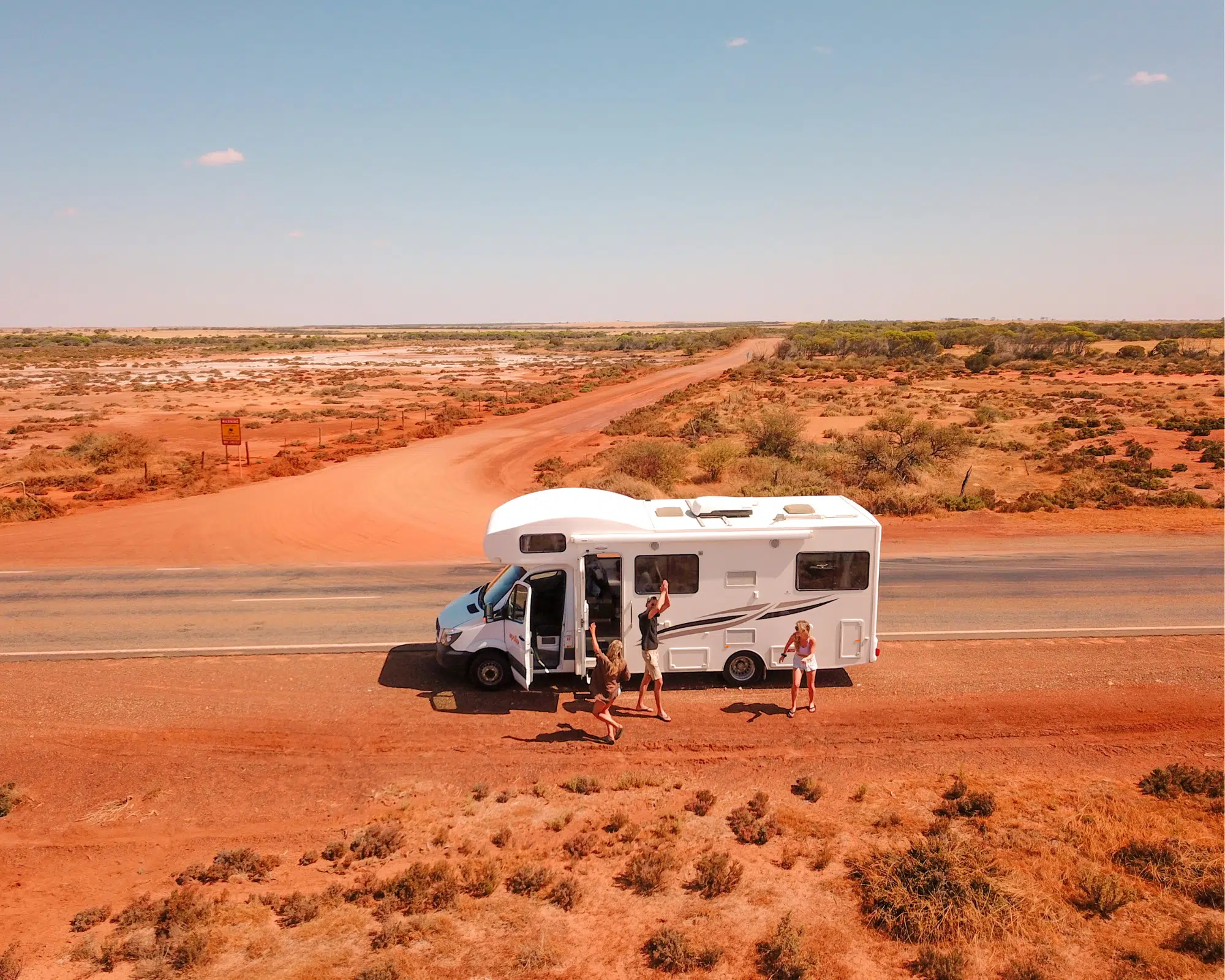
Share Your Plan with Someone
This one’s simple but seriously important: let someone know your route.
- Where you’re going
- Where you’ll be sleeping
- When you’ll check in
If things go quiet and you miss a check-in, your mate will know to raise the alarm. No one wants to be the next “lost in the bush” headline, yeah?
Stick to the Main Roads
Unless you’re in a fully kitted-out 4WD and know exactly what you’re doing, stick to the big, sealed highways.
The unsealed stuff can look fine one minute and turn into full-on drama the next, soft sand, washouts, deep ruts… not worth it.
If the road sign says “4WD only”, believe it. That’s not a challenge, it’s a heads-up.
Fuel Up, Don’t Get Stuck
Let’s be real, nothing kills the outback buzz like realising you’ve pushed it too far and the tank’s running dry. Out here, there’s no Uber, no NRMA five minutes away, and defs no servo around the next corner. You’ve gotta fuel smart.
Stop Early, Stop Often
Outback roadie tip #1: don’t wait ‘til you’re on empty to look for fuel.
Fuel stations can be hours (and hundreds of k’s) apart, and they’re not always open, especially in tiny towns or remote roadhouses. Some shut up shop by mid-arvo, and good luck finding one open on a Sunday in the middle of nowhere.
If you’re under half a tank, fill up. Every single time. No excuses.
Take Spare Fuel With You
If you’re heading off the beaten track, even just a bit, a spare jerry can is an absolute game-changer.
- Take one if you’re sticking to sealed roads
- Pack two if you’re doing big outback stretches or camping remote
- Make sure you’ve got the right fuel type and label it clearly
- Keep it in a safe, secure spot in the boot or tray, no loose cans flying around!
Having spare fuel means you’re in control, not sweating bullets when that fuel light comes on.
Water, Snacks + Supplies You’ll Be Grateful For
This ain’t your quick trip down the highway, it’s the outback, and out here, supplies matter. Think survival mode… but with snacks. If you pack smart, you’ll stay hydrated, full, and way less feral when things get hot, dusty, and weird.
Water: Don’t Mess Around
We’re not being dramatic, water is everything on an outback roadie. You’re in the heat, miles from anywhere, and guess what? Not every stop has drinkable water. Some servos in dry zones won’t even let you fill up your tank without charging.
Here’s your baseline:
- At least 6L per person, per day
- Extra water for cooking, washing up, and cleaning
- Pack more than you think you need, and then chuck in a couple more bottles for good measure
Chuck it in reusable containers if you can, better for the planet, easier to manage.

Snacks: Load Up on the Good Stuff
Forget relying on servo pies and melted chocolate bars. You need non-perishable, no-fuss snacks that’ll survive the heat and keep you going.
Some of our go-to’s:
- Muesli bars, trail mix, rice cakes, jerky
- Canned tuna, beans, soup (yep, cold if it comes to it)
- Crackers, wraps, peanut butter, the kings of road trip lunching
And don’t forget brekkie stuff, instant oats, long-life milk, maybe a sneaky jar of Nutella if you’re feeling fancy.
Toilet Rolls + Wipes = Gold Dust
Look, toilets in the outback are few and far between, and when you find one, there’s a decent chance there’s no loo roll left. You’ll be buzzing you packed your own.
RatPack essentials:
- 2 rolls min. (one stashed deep as a backup)
- Baby wipes – for hands, pits, and those classic no-shower days
- Hand sanitiser – it’s dusty, grubby, and nowhere near a sink
Also: if you see a rest stop with toilets, use it. Even if you don’t feel like you need to. Because you don’t know when the next one’s coming.
Your Outback Survival Kit
This is the gear you hope you won’t need… but will be bloody stoked to have if things go sideways. The outback doesn’t do second chances, so pack smart, prep proper, and you’ll be sweet.
First Aid = Non-Negotiable
You’re hours away from a hospital at best, so your first aid kit needs more than just a few plasters and a sachet of paracetamol.
Make sure it’s got:
- Snakebite bandage (yes, snakes are a thing out here)
- Compression bandages, antiseptic, tweezers, pain relief
- Blister stuff, burn gel, and anything you’d want if you took a tumble
And if you’re heading on any hikes or off-track wanders, chuck it in your day bag, not just the boot.
Spare Bits That Could Save Ya
Breakdowns happen, and even minor stuff can leave you stranded if you don’t have the basics.
Here’s what we pack:
- Spare fuses
- A solid torch/headlamp (with fresh batteries)
- Jumper leads – especially if you’re running music + fridges on your starter battery
- A tow rope (yep, even 2WDs get stuck)
- Multi-tool or basic tool kit – zip ties are also a road trip miracle item
Most of this stuff doesn’t take up much room, but you’ll feel like Bear Grylls when you actually need it.

Flies? They’re Not a Joke
We ain’t being dramatic, the flies in the outback have zero chill.
You’ll want:
- Insect repellent (go DEET if you can handle it)
- Fly nets for your face, game changer at campsites and walking tracks
- Long sleeves and pants if mozzies are on the menu too
We’ve seen more travellers go feral from flies than from flat tyres. Pack the goods.
Power Up (Because Wall Plugs Are Rare)
Once you’re off the grid, it’s all about keeping your devices charged – especially your phone or anything that holds your maps and safety info.
What helps:
- Car charger with dual USB slots
- A chunky 20,000+ mAh battery pack
- Solar panel charger if you’re camping off-grid for a while
No juice = no comms, no maps, no tunes = no good.
Stay Connected When You’re Way Off Track
Mobile reception in the outback is patchy at best. Telstra has the widest coverage, but even that drops out the deeper you go.
If you’re venturing super remote, consider:
- Renting a satellite phone
- Packing a UHF radio – old school, but super handy in emergencies or convoy travel
You probably won’t need ’em… but if you do? You’ll be glad you didn’t roll the dice.
Outback Wildlife + Road Hazards
One minute you’re cruising to a banger playlist… next minute there’s a roo in your lane, a road train thundering past, and an emu doing its best roadblock impersonation. The outback doesn’t mess about, and you’ve gotta stay switched on behind the wheel.
Out here, trucks aren’t just trucks, they’re multi-trailer beasts that can stretch up to 50 metres long (yep, five-zero). Overtaking them takes proper planning and full focus.
Here’s how to handle it:
- Give ‘em plenty of room, they need longer to brake, swerve, everything
- Wait until you’ve got clear, straight visibility for ages
- Signal early, build up speed, and overtake smoothly
- Don’t cut back in too quick, that tail whip is real
And if they’re coming towards you on narrow roads, slow down and stay left. Getting blasted with red dust is part of the fun (kinda).
Roo O’Clock is Dawn + Dusk
Kangaroos are cute… until they jump straight across the road and into your van. They’re most active around sunrise and sunset, and they move fast.
Best move?
- Avoid driving at dawn and dusk if you can
- If you have to drive, take it slow and scan the verges constantly
- If you see one… assume there’s more behind it
Hitting a roo isn’t just sad – it can fully wreck your vehicle and your trip.
Camels, Emus, Cattle & Co.
It’s not just kangaroos out here. You might spot:
- Wild camels in the red centre (yep, there are thousands)
- Emus legging it across highways
- Cattle, horses, pigs and goats wandering near station roads
They’re unpredictable, especially cattle that just loiter mid-lane. Always slow down when you see animals near the road, and be ready to stop if they’re not moving.

Keep Your Distance
Some of the wildlife, especially birds and roos, might get a bit too curious if you’re pulled up for a break or camped out in the bush.
- Don’t feed wildlife – not just bad for them, but they’ll come back
- Stay back if you spot an animal nearby – they can get aggressive if startled or feel threatened
- Keep an eye on your food and rubbish too – emus have no shame and will absolutely go for your snacks
Where to Camp + Surviving the Outback Heat (and Cold!)
Where to Camp + Where NOT to
When it comes to pulling up for the night in the outback, a bit of planning goes a long way. Yeah, it might be tempting to stop wherever looks quiet, but in the middle of nowhere, not every spot is a good idea. Let’s break down your options (and steer you clear of the stuff that’ll cause dramas).
Your Main Camping Options
There’s a few types of places where you can camp, and they’re not all created equal:
- Rest Stops – Usually found on highways. They’re basic but useful, especially for quick overnight breaks. Some have drop toilets or bins, others are just dirt and a sign.
- Free Camps – These are the gems. Designated camping zones that won’t cost ya a cent. They might be on crown land, beside rivers, or in small towns that welcome travellers.
- Holiday Parks / Paid Campsites – If you need a shower, a plug for your devices or some creature comforts, these are your go-to.
To find legit spots? Download WikiCamps. It’s the ultimate roadie tool – filters by toilets, water, free sites, and what other travellers reckon. Small cost. Big win.
How to Know It’s a Good Spot
You don’t need to overthink it, just check for:
- Signs saying camping is allowed
- Listings and reviews on WikiCamps or CamperMate
Use common sense, trust your gut, and if it feels dodgy, keep rolling. You’ll find somewhere better.
Surviving the Outback Heat (and Cold!)
Here’s something most first-timers don’t realise, the outback might look like one big sunburn waiting to happen, but it can also get properly chilly, even in summer. That’s right, you’ll be sweating buckets one minute and reaching for a hoodie the next.
Pack Smart for All Seasons (Yes, Even Summer)
Daytimes? Dry, intense, full-sun heat, especially if you’re rolling through December to February, where temps regularly hit 40°C+.
But once the sun drops? So does the temp.
- In desert spots like Uluru or Kings Canyon, nights can dip to 10–15°C, or even lower
- In winter (May–Aug), it can go below zero, so if you’re camping, it’s full thermals-and-beanie vibes
Basically: don’t get caught out with just shorts and singlets, even in peak summer.
Your Outback Clothing Must-Haves:
- A wide-brimmed hat (caps don’t cut it out here)
- Sunnies with proper UV protection
- Lightweight long-sleeve shirt + pants, for sun and fly protection
- A warm hoodie or jumper for evenings
- And if you’re camping: thermal top, trackies, and warm socks (you’ll thank us when it hits 2am)

Stay Cool, Stay Hydrated
The outback sun is next level, you don’t always realise how much water you’re losing.
- High SPF sunscreen – slap it on and reapply often
- Hydration is key – aim for litres, not just sips
- Pack a few electrolyte sachets or tabs to throw in your bottle when the heat hits hard
You’ll be glad you took this seriously, trust.
Offline Essentials: Apps You’ll Wanna Download
Once you’re out in the sticks, reception goes MIA real quick, so having the right apps downloaded before you hit the road is a game-changer. No signal? No dramas.
Here’s what we reckon every outback roadtripper should have locked and loaded:
WikiCamps
The go-to app for finding campsites. Free spots, rest areas, paid parks, it’s all in there, with reviews from other travellers, plus filters for stuff like toilets, BBQs, and pet-friendly zones. Absolute must-have.
Fuel Map Australia
Shows all the fuel stops around the country, including the price, the type (diesel, Opal, unleaded), and whether it’s even open. Clutch for long stretches where stations are few and far between.
HERE WeGo or MAPS.ME
Both are legends for offline navigation. Just download the maps for the areas you’re heading to while you’ve still got WiFi, and boom, GPS without needing signal.
Spotify (or whatever you use for tunes)
Download those road trip playlists while you’ve got internet, out there, streaming ain’t gonna happen. Make sure you’ve got a backup DJ (aka your passenger) who knows your vibe.
Ready to Roll? Let’s Get You Out on the Red Dirt
From sunrise hikes at Uluru to dusty roadhouse lunches, wild emu sightings to stargazing under the clearest skies you’ve ever seen, the Aussie outback hits different. And the best way to do it? Prepped properly, with the right ride and a plan that won’t leave you stuck in the middle of nowhere.
We’ll help you lock in a camper or road trip vehicle that actually suits the route you wanna take, whether you’re staying sealed or chasing something more remote. You’ll get more discount than booking online, plus personalised advice from legends who’ve driven every dusty km themselves.
If you’re dreaming of long straight roads, red dirt sunsets, free camps under the stars, and stories for days, hit us up.
We’ll make sure you’ve got the right gear, a route that’s safe and scenic, and a camper that keeps you comfy all the way.
Let’s make this outback roadie one for the books. Yeeeeeeeeeeew! 🙌
👉 Plan your trip with the RatPack crew here

About the Author: Sammy

with RatPack Travel?

5-Star Google Rated


Our Customers Say it Best


